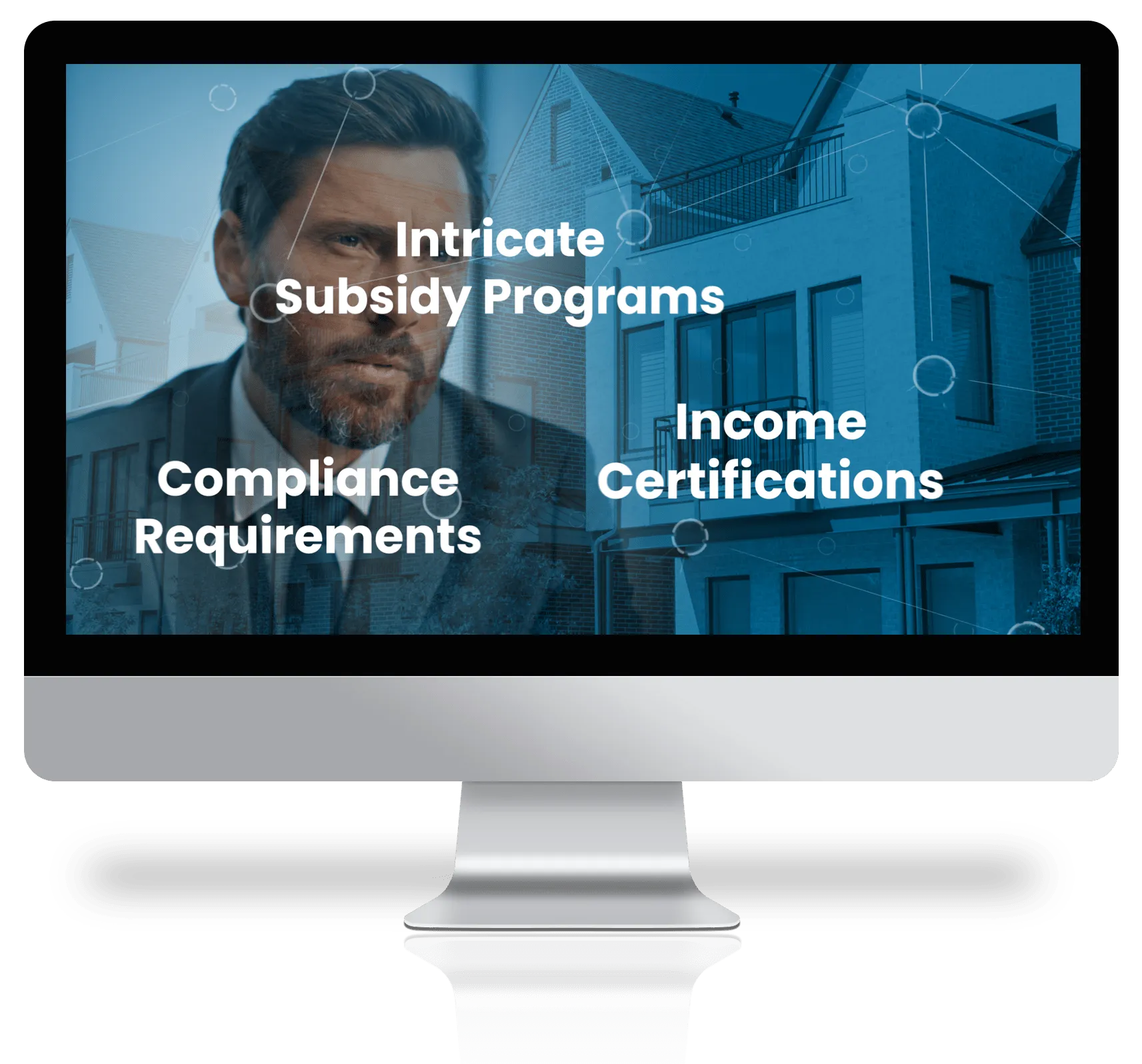
Small-to-Mid Affordable Housing Portfolios Fall Behind
Small-to-mid affordable housing portfolios fall behind because legacy property management systems lack native support for complex HUD compliance workflows like HOTMA, NSPIRE, and TRACS, forcing teams to rely on manual workarounds that increase audit risk and operational overhead.
Most platforms are built for:
- Large‑scale enterprise landlords, or
- Generic market‑rate portfolios with minimal compliance pressure.
This creates a major operational gap for small- to mid-sized operators. Software built for market-rate housing often fails. It struggles to support HOTMA-compliant workflows. It lacks NSPIRE-ready inspections and TRACS processing. It misses the day-to-day realities of HUD-driven operations.
This article is for you if you’re:
- An affordable‑housing operator managing 50–1,000 HUD‑subsidized units
- Part of the public housing authorities (PHAs) or HUD‑contract managers using PBRA or HCV
- Owners or asset managers navigating NSPIRE, HOTMA, and TRACS‑driven compliance
Your team might constantly beg for “just one more spreadsheet” to keep up with HUD rules. You are not alone. Your software is likely part of the problem.
The HUD‑Shaped Software Gap
Most property management platforms treat HUD and affordable‑housing programs as an afterthought. They just add a “configuration layer” on top of market‑rate logic. That leads to three core pain points:
Pain Point 1: HOTMA‑lite workflows
HUD’s HOTMA final rules (Title I) change how you handle income exclusion. They alter asset‑testing, safe‑harbor adoption, and preference rules. These changes apply across public housing and Section 8.
Many property management systems still require manual overrides. They need spreadsheet calculations or disconnected workflows to support HOTMA requirements. This increases the risk of reporting inconsistencies. It causes compliance errors, delayed certifications, and audit exposure.
Pain Point 2: Legacy TRACS and NSPIRE frictions
Your platform must have TRACS‑ready data structures. This means clean 50058/50059 alignment, vouchering, and RAD‑conversion tooling. Without these, submitting to HUD‑funded programs becomes slow. It also becomes error‑prone.
Few “generic” tools support NSPIRE‑ready inspection workflows. Instead, you end up using HUD‑inspection add‑ons. You might also rely on manual PDFs.
Pain Point 3: Affordable‑housing blind spots
Market‑rate‑first software poorly handles:
- Waiting‑list and grievance processes under HOTMA.
- NSPIRE‑based inspection scoring and remediation tracking.
- RAD‑conversion and PBRA/PBV documentation.
This hurts small‑to‑mid operators. You pay for “enterprise” complexity. Yet the tools do not actually serve HUD‑driven operations.
Missing HUD‑Ready Capabilities That Hurt Small‑to‑Mid Portfolios
Your software must speak HUD fluently. When it does not, you see gaps in day‑to‑day operations.
Gap 1: HOTMA‑compliant income and certification logic
HUD’s HOTMA rules (issued via 24 CFR updates and HUD notices) require changes to:
- Income exclusions (e.g., certain student aid, one‑time gifts).
- Asset‑testing thresholds and reporting.
- Safe‑harbor options for troubled PHAs and owners.
A HOTMA‑ready platform:
- Bake these rules directly into tenant certifications and determinations.
- Exports to TRACS‑style forms (50058/50059) without manual recalculation.
Many operators lack centralized HOTMA workflows. They rely on spreadsheets, manual calculations, and disconnected PDF documentation. This increases the risk of reporting errors. It also causes audit findings and operational delays.
Gap 2: NSPIRE‑ready inspections and reporting
NSPIRE replaces older REAC‑style standards. It uses a health‑ and safety‑focused physical inspection model. This model applies across HUD‑funded portfolios.
Yet many PM systems:
- Force managers to export data into third‑party inspection tools.
- Don’t auto‑track deadlines for deficiency corrections or reinspections.
A NSPIRE‑ready platform should:
- Map inspection checklists directly to HUD‑defined NSPIRE standards.
- Integrate deficiency logging, repair assignments, and audit trails for HUD reviews.
Gap 3: TRACS‑driven vouchering and compliance
For HUD‑subsidized programs, TRACS is the backbone of:
- Tenant certifications (50058/50059).
- Voucher processing (MAT30) and payment approvals.
If your system:
- Doesn’t support TRACS‑compliant data exports, or
- Requires manual reconciliation of TTPs, utility allowances, and HAP amounts,
Then you add weeks of overhead every year. This is especially true when navigating RAD conversions. It also applies to PBRA renewals or HCV PHA‑admin changes.
Gap 4: Cost‑prohibitive “HUD‑as‑an‑addon” pricing
Many vendors charge extra fees for:
- “HUD modules” or “affordable‑housing add‑ons.”
- TRACS or NSPIRE‑specific reporting.
This acts as a tax on compliance for small‑to‑mid operators. You pay more to meet HUD rules. These rules are non‑negotiable.
Compliance Requirements Changed Faster Than the Software
Affordable housing operations have grown much more complex. HOTMA updates, NSPIRE inspections, and TRACS processing are now central. So are tenant certifications and audit documentation. These tasks drive daily property management operations. This is especially true for Section 8, PBRA, RAD, LIHTC, and Housing Choice Voucher portfolios.
According to U.S. Department of Housing and Urban Development guidance, operators must maintain accurate records. This includes income calculations, inspection records, and subsidy documentation. It also includes recertifications and compliance reporting tied to HUD-driven workflows. But many property management systems were built for conventional multifamily operations. They were not built for affordable housing compliance.
As HUD requirements evolved, small- to mid-sized operators faced gaps. They had to fill them with spreadsheets and disconnected inspection tools. They used manual data uploads and duplicate data entry. This created more administrative work rather than less.
Small-to-Mid Operators Carry the Biggest Operational Burden
Large organizations can often absorb inefficient workflows. They just add compliance teams, consultants, or multiple software systems. Small- to mid-sized portfolio operators lack that flexibility.
Manual tasks increase pressure on stretched teams. This includes every manual certification, inspection follow-up, and reporting process. It also includes workflows tied to HOTMA calculations. NSPIRE inspections, TRACS submissions, and 50058/50059 certifications add to this burden.
The result is growing exposure to reporting delays. You also face certification errors, inconsistent records, and audit risk. This is not because teams are unqualified. It happens because the software creates friction across everyday compliance tasks.
HUD-Aligned Workflows Are Becoming Essential
HUD continues to expand its operational guidance. It publishes updates on HUD.gov and HUD Exchange. HOTMA introduced major changes to income exclusions and asset verification rules. Meanwhile, NSPIRE replaced UPCS. It brought a stricter inspection framework focused on health and safety standards.
This changes things for small- to mid-sized operators. Software can no longer act as a generic property management system. You cannot just add affordable housing workflows later.
A HUD-aligned platform should centralize key tasks. This includes certifications, inspections, reporting, compliance documentation, and voucher processing. These must sit in a single operational workflow. The goal is not simply to add more features. It is to reduce operational friction. It also helps teams maintain audit-ready compliance across the portfolio.
Next Steps: Is Your HUD‑Ready Software Keeping Up?
Ask yourself:
- Does my current software natively support HOTMA‑based rules and NSPIRE‑ready inspections?
- Am I still relying on spreadsheets and PDFs to meet HUD compliance deadlines?
- Does my current platform support TRACS-compatible workflows, centralized certifications, and HUD-aligned reporting without relying on manual reconciliation?
What if the answer is no? Then it is time to migrate to a better platform. You need a tool that treats HUD‑driven, small‑to‑mid portfolio ops as first‑class citizens. They should not be an afterthought.
How ExactEstate Helps Small-to-Mid Affordable Housing Operators
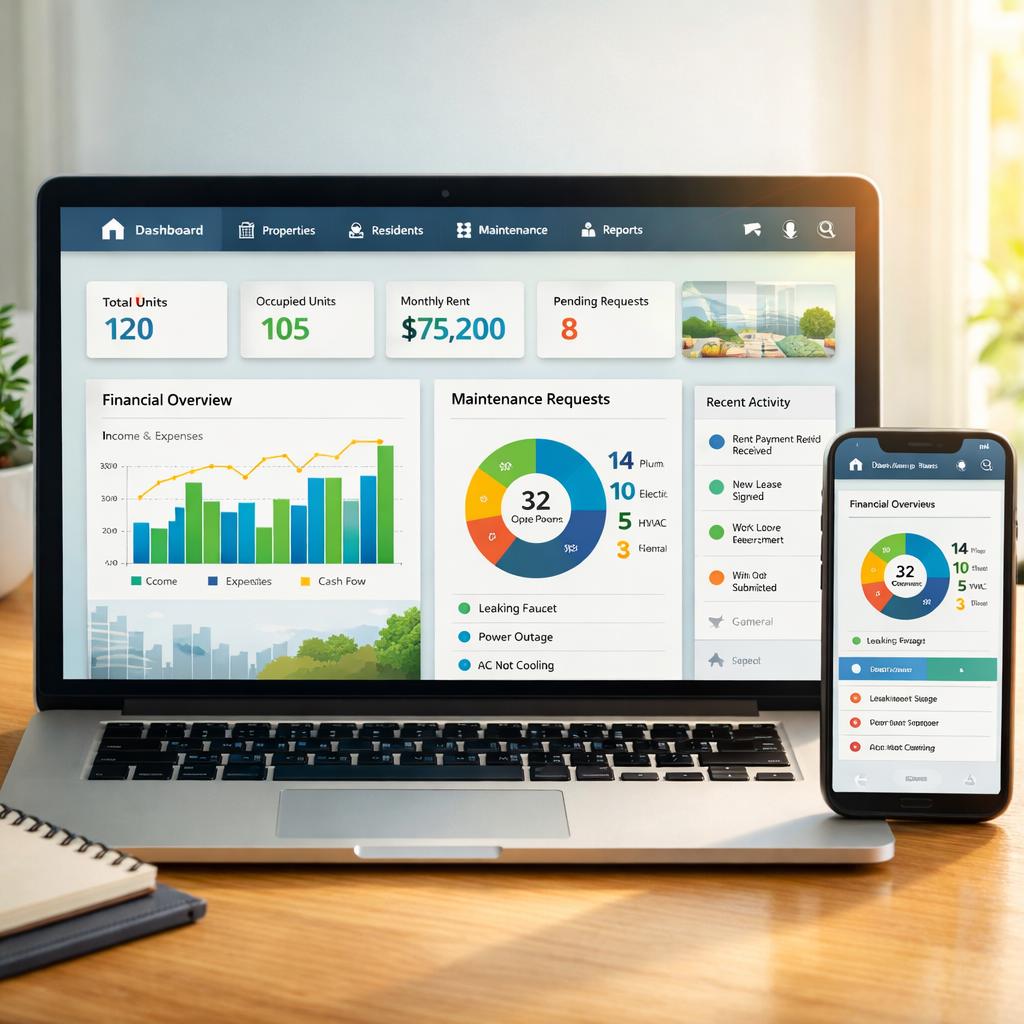
ExactEstate was built specifically for affordable housing operations. It was not retrofitted from market-rate property management software. It stops forcing teams to manage HUD compliance through spreadsheets. You do not need disconnected inspection tools or manual reporting. Instead, ExactEstate centralizes HOTMA-ready workflows, NSPIRE-aligned inspections, and TRACS-compatible processing. It also handles certifications, compliance documentation, and operational reporting on a single platform.
This helps small- to mid-sized portfolio operators. It reduces administrative workload and improves audit readiness. It simplifies daily compliance tasks. You also gain better visibility across affordable housing operations. Best of all, you do this without adding more systems or hidden compliance add-ons.
Frequently Asked Questions
What is HUD-compliant property management software?
HUD-compliant property management software supports affordable housing workflows. This includes programs like Section 8, PBRA, RAD, LIHTC, and Housing Choice Vouchers. It typically supports certifications, TRACS processing, and compliance reporting. It also handles inspections and audit documentation.
Why are small-to-mid affordable housing operators struggling with traditional property management systems?
Most traditional platforms were built for conventional multifamily portfolios. They were not built for HUD-regulated operations. Compliance requirements like HOTMA and NSPIRE kept evolving. This forced many smaller operators to rely on spreadsheets. They had to use manual workflows and disconnected tools to manage compliance tasks.
What is HOTMA and why does it matter?
HOTMA (Housing Opportunity Through Modernization Act) introduced major updates. These apply to income calculations, asset limitations, and verification requirements for affordable housing programs. Property management systems must adapt these workflows. This helps operators remain compliant with HUD guidance.
What is NSPIRE?
NSPIRE (National Standards for the Physical Inspection of Real Estate) is HUD’s updated inspection framework. It focuses on health and safety standards across affordable housing properties. It replaces older UPCS inspection models.
Why are TRACS workflows important?
TRACS supports tenant certifications, voucher processing, and subsidy management. It also handles HUD reporting. Some systems lack TRACS-compatible workflows. These often require manual uploads, reconciliation, and duplicate data entry.
What should affordable housing operators look for in a property management platform?
- HOTMA-ready workflows
- NSPIRE-aligned inspections
- TRACS-compatible processing
- Centralized certifications and reporting
- Audit-ready documentation
- Transparent pricing without HUD add-on fees
How can ExactEstate help affordable housing teams?
ExactEstate helps affordable housing operators centralize compliance workflows. It simplifies certifications and improves reporting visibility. It also manages inspections and reduces manual administrative work. This platform is designed specifically for HUD-driven operations. BOOK A DEMO.
Key HUD Compliance Thresholds Impacting Operations
Under 24 CFR 5.603, the income limit definition states “or (2) Thirty (30) percent of the median income for the area, as determined by HUD, with adjustments for smaller and larger families, except that HUD may establish income ceilings higher or lower than 30 percent of the area median income for the area if HUD finds that such variations are necessary because of unusually high or low family incomes.” (https://www.ecfr.gov/current/title-24/section-5.603)
For dependent deductions, 24 CFR 5.611 mandates “(1) $480 for each dependent, which amount will be adjusted by HUD annually in accordance with the Consumer Price Index for Urban Wage Earners and Clerical Workers, rounded to the next lowest multiple of $25;” (https://www.ecfr.gov/current/title-24/section-5.611)
Regarding asset limits, 24 CFR 5.618 specifies “(i) The family's net assets (as defined in § 5.603) exceed $100,000, which amount will be adjusted annually by HUD in accordance with the Consumer Price Index for Urban Wage Earners and Clerical Workers;” (https://www.ecfr.gov/current/title-24/section-5.618)
Sources
- 24 CFR 5.603 — the regulation text — Electronic Code of Federal Regulations
- 24 CFR 5.611 — the regulation text — Electronic Code of Federal Regulations
- 24 CFR 5.618 — the regulation text — Electronic Code of Federal Regulations
What changed
- — 4 cited figure(s) match the current regulation text
- — 4 cited figure(s) match the current regulation text
About the author

Matt Hoskins is the CEO of ExactEstate. He grew up in his family’s affordable housing management company and has spent his career on the operator side of LIHTC, HUD and Section 8 properties. ExactEstate is the result: compliance-first property management software for affordable housing, with TRACS submission built in.