SUPPORT
The support ticket you never had to open is the one that counts.
EEva, walkthrough knowledge and contextual guidance should answer the questions the product can answer immediately. When the issue needs a person, the support path should be obvious and accountable.
Support should surround the user, not sit behind a queue.
Ask inside the workflow.
Help that lives in a separate knowledge base gets read by the people who already know it exists.
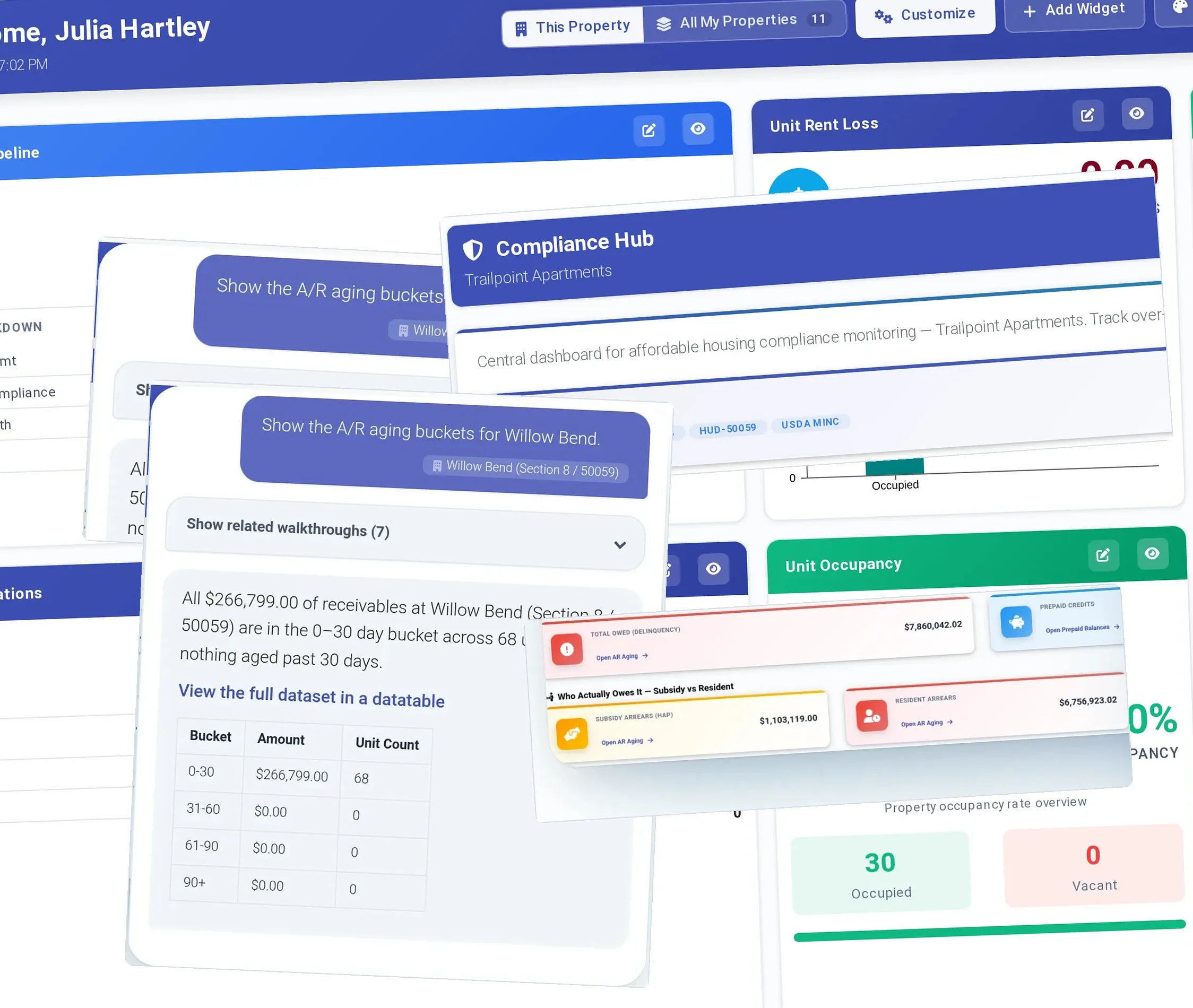
EEva and the product walkthroughs sit inside the workflow instead: ask the question where you are stuck, in the screen you are stuck in, and get taken to the thing that does it rather than to an article about it.
Learn while the work happens.
When a lot of people hesitate at the same step, that is a product signal, not a training problem.
Behavior Intelligence measures where friction actually occurs and can surface guidance in context. We describe it as adaptive guidance to the level the current targeting and governance support, and no further — an assistant that guesses at what you meant is worse than one that waits to be asked.
Talk to a person when it needs a person.
Some questions need a person, and the path to one should be obvious rather than buried behind a deflection funnel.
We are not printing a response-time number here until telemetry and the commercial terms support it. What we will tell you is how the service model works, who picks the issue up, and what happens when it turns out to be a product defect rather than a question.
Measure resolution, not ticket volume.
Ticket volume is the metric that rewards a support team for having a confusing product.
The ones worth watching are first response, first-contact resolution, time to resolution, what EEva resolved without a person, and how many tickets stopped being filed because the product stopped causing them. We are measuring those now and will publish them when the numbers have been audited — not before.