EEVA COMPLIANCE INTELLIGENCE
Compliance answers that start from your property’s own facts.
EEva answers from the property in front of your staff, not from generic affordable-housing prose. EEva Compliance Intelligence makes that possible by assembling each property’s programs, identifiers, contracts, certification state, deadlines, blockers and known unknowns. It requires Affordable Housing.
A seasoned compliance specialist spends years learning which rules apply where. Software should at least remember the property-specific facts.
Try EEva on sample data
Ask a compliance question, run a leasing conversation or query a sample portfolio. Every answer here uses illustrative sample data, clearly labelled.
A rule only helps if the system knows when it applies.
Affordable housing does not fail because teams have never heard of HOTMA, TRACS, a TIC or a 50058. It fails when the property-specific program, election, contract, effective date or missing fact changes what the correct next action is. EEva Compliance Intelligence is the context layer that makes that difference visible.
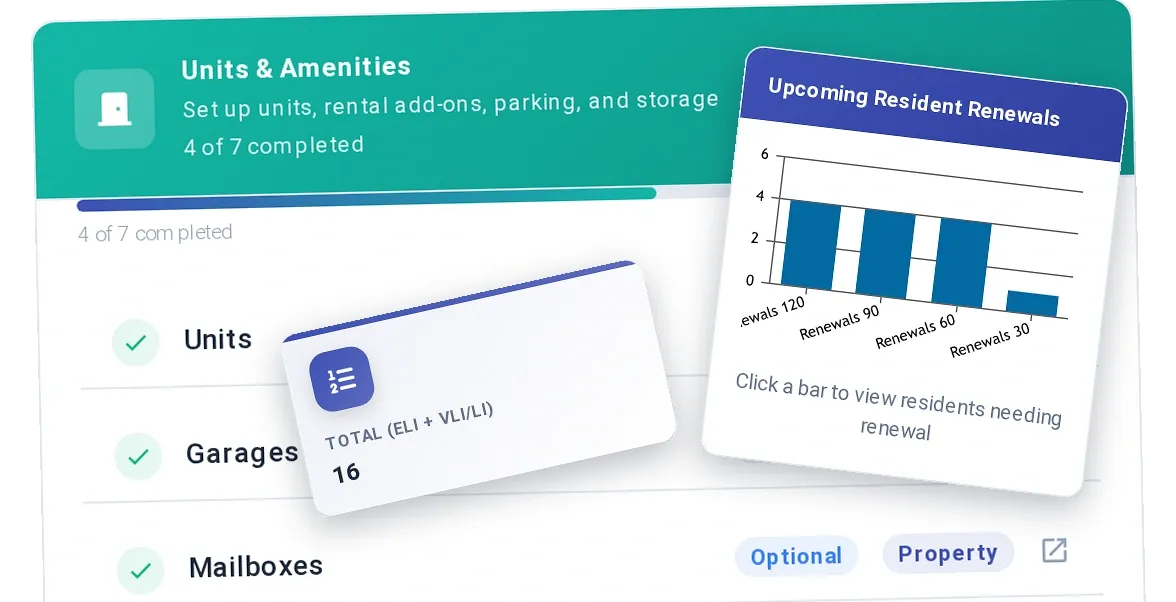
What does EEva Compliance Intelligence know about a property?
It knows what ExactEstate already holds about that property, assembled into a Property Compliance Profile. It is a read of the system, not prose a model wrote about the system.
Programs and identifiers
The configured certification program, the PHA, HUD and RD identifiers the property actually files under, and the additional program layers riding on top of it.
Contracts and elections
Contract coverage, LIHTC elections, HFA jurisdiction, and the effective-dated choices that change how a certification has to be processed.
Readiness and risk
Recertifications coming due and overdue, the blockers holding them, conflicts between program requirements, and what the system knows it does not know.
Source provenance
Where a property fact came from, and when that part of the profile was last updated.
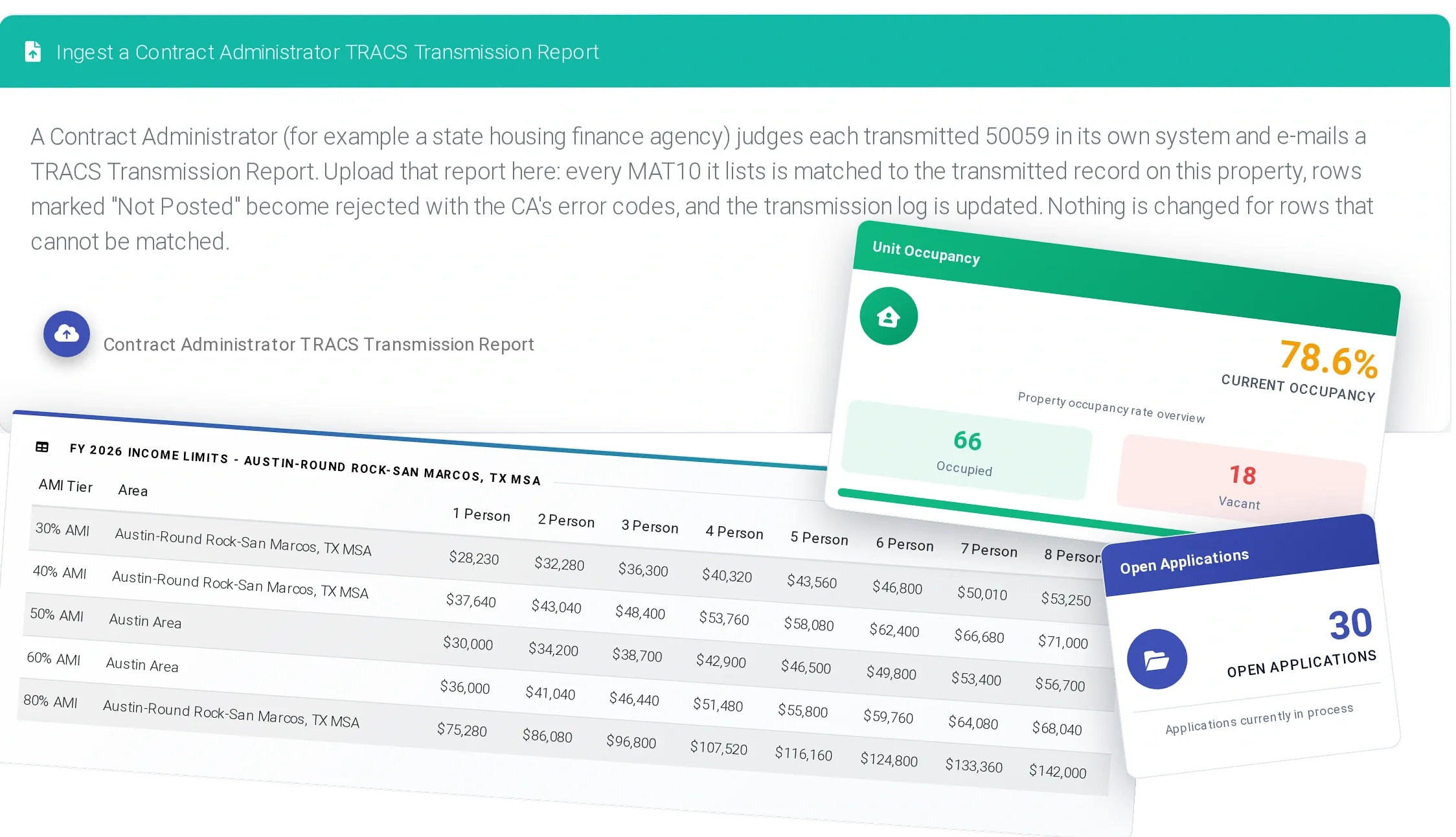
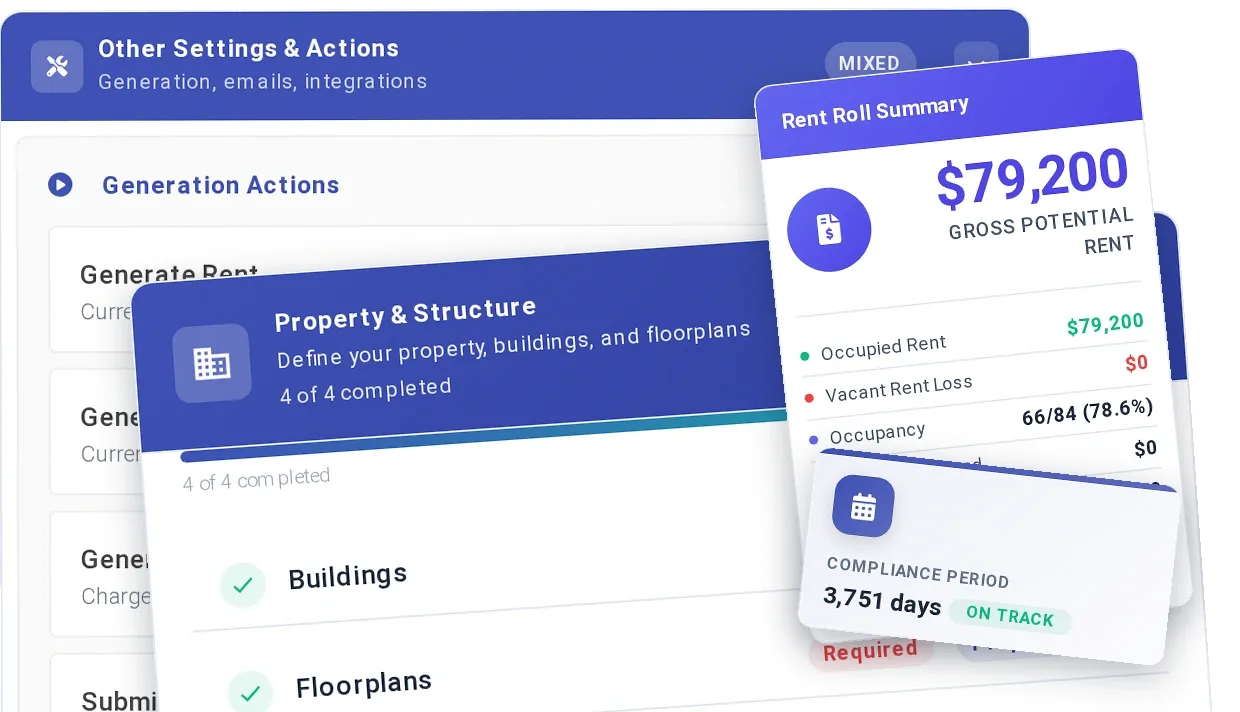
Which four questions does Compliance Intelligence answer?
Compliance Intelligence is built around four questions, in this order. What applies here? What is missing? What is blocking the next step? And what should this person review or do next?
When the system cannot support an answer from the property record and a current source, it says so. An assistant that fills the gap with confident prose is worse than one that leaves it open, because the gap is where the audit finding lives.
Regulations change. Your software notices before the next certification does.
Rules change on a schedule nobody at the property sets. The cost lands at the next certification, months after the notice was published.
ExactEstate watches authoritative HUD and Rural Housing Service publications for changes that may affect the programs your properties operate, and stages what it finds.
Staged is the important word. A finding is reviewed by a person before it changes a product rule. The software watches; it does not quietly rewrite your compliance behavior overnight.
Give the specialist a head start, not a replacement.
The goal is not to remove professional judgment. It is to stop making a specialist reconstruct the same property facts for the next question, the next new employee and the next handoff.
Institutional knowledge should be available at the workflow, where the work is, without turning into an AI decision nobody reviewed.