USDA RURAL DEVELOPMENT · SECTION 515/521 · RD 3560-8 · MINC
Run USDA Rural Development properties without a parallel process.
ExactEstate keeps project identifiers, household certification, Form RD 3560-8, the MINC XML and the property’s books on the same record. It is plain about the step a person takes. Your staff upload the validated file, and the outcome is recorded.
Different federal programs can share a household without sharing the same rules.
What does USDA property management software need to know first?
It needs the project’s identity: the Section 515 project, the Section 521 rental assistance attached to it, and the borrower and project identifiers the agency knows it by.
The USDA Rural Development certification, Form RD 3560-8, is one of the five certification lanes ExactEstate supports. It sits beside LIHTC, Public Housing, HUD Multifamily and Tribal/IHBG. A certification is only as right as the property-level USDA configuration behind it.
Check that configuration first in the demo, because nothing downstream is right until it is.
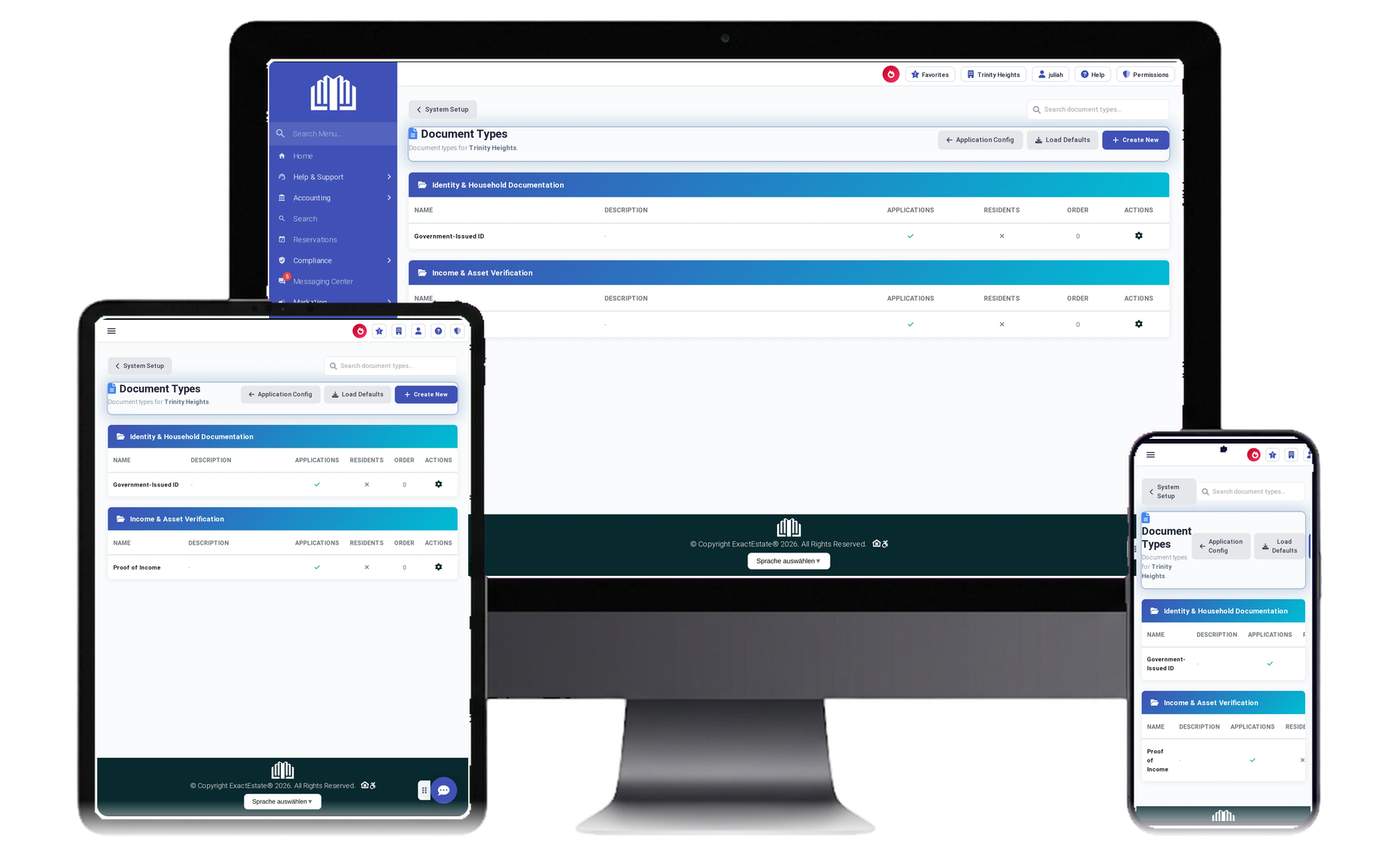
Build the RD 3560-8 from the household workflow, not a second data-entry job.
Form RD 3560-8 is the tenant certification, and it should be the output of the household workflow, not a separate data-entry job.
ExactEstate builds the certification from the household, income and asset data the site team maintains. It routes the certification to a person for approval. Only then does it generate the RD 3560-8 PDF as a frozen artifact. What was approved is what was filed, and the record keeps the approval with the artifact.
Validate the MINC file before your staff upload it.
Generate the MINC file
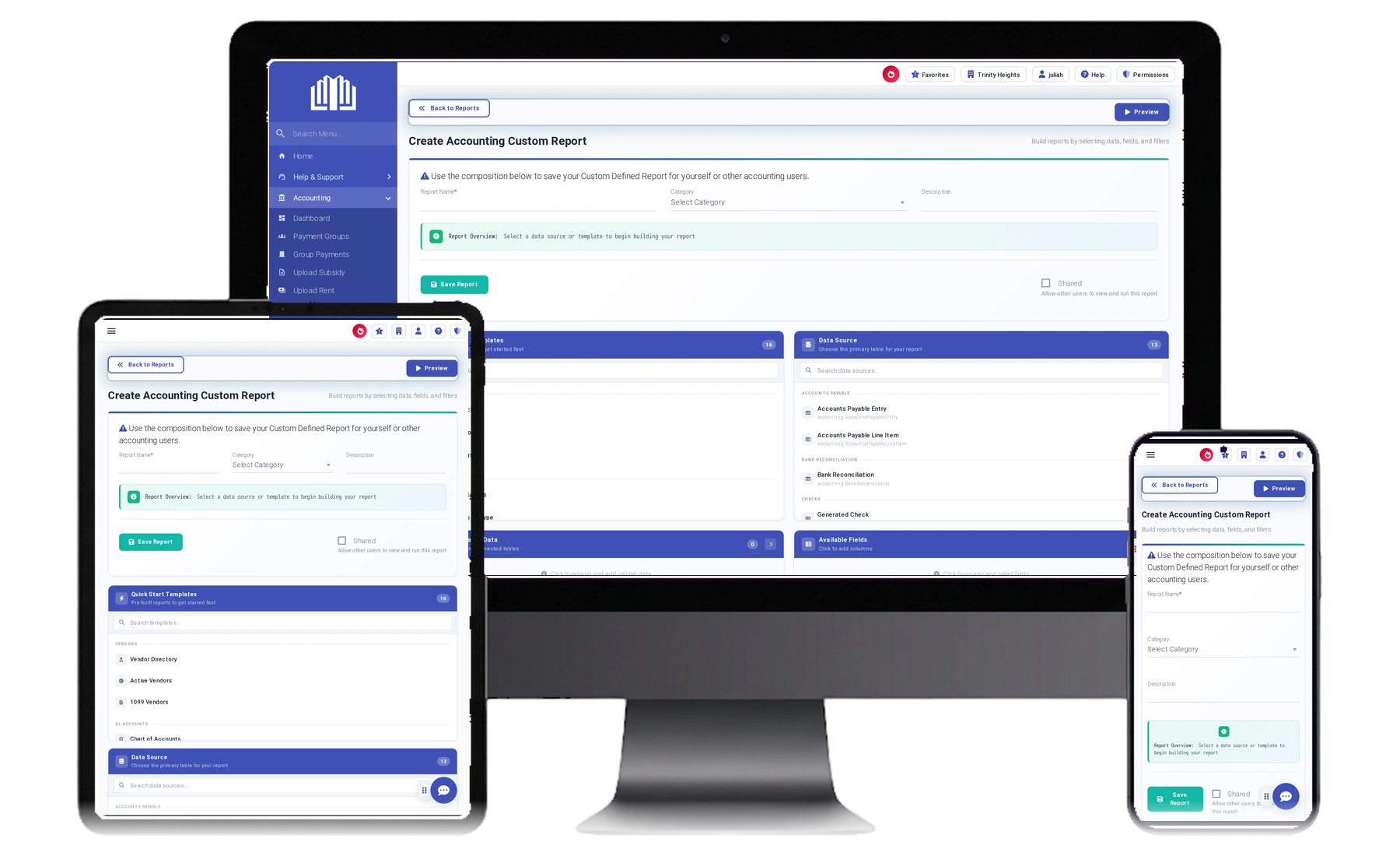
USDA receives RD 3560-8 data through MINC. ExactEstate produces the MINC XML from the approved certification, so the file and the PDF describe the same household.
Validate it against the schema
The XML is checked against the USDA schema before anyone downloads it. A schema error is caught here, on the property team’s screen, not in the agency portal.
Download, file, record
The operator downloads the validated file and uploads it through the agency portal. ExactEstate records that the filing happened and what came back. It does not submit the file to USDA on the operator’s behalf.
Keep “we filed it” and “USDA accepted it” apart.
“We filed it” and “USDA accepted it” are two different statements, made by two different parties, and an audit will ask for both.
ExactEstate records the first as what it is: the staff member’s record that the file was uploaded, by whom and when. The agency’s outcome is recorded separately, when it exists, as the agency returned it.
The certification record keeps them apart, and so does this page. A filed certification is not an accepted one until the agency says so.
When does HOTMA apply to a USDA Rural Development property?
HUD and USDA both apply the federal income rules HOTMA changed. They did not adopt them on the same calendar, and a USDA property that inherits a HUD compliance date has the wrong date.
USDA’s final rule aligning its annual income and net family asset calculations with HOTMA was published at 91 FR 18769 and took effect April 13, 2026. Beyond that, the applicable Rural Development instruction is the source for a USDA certification’s timing. Where that instruction is being re-verified, this page says so instead of printing a date it cannot cite.
In ExactEstate, HOTMA applies per property from its adoption date: the indexed asset threshold, the updated deductions and the 10% medical expense phase-in.
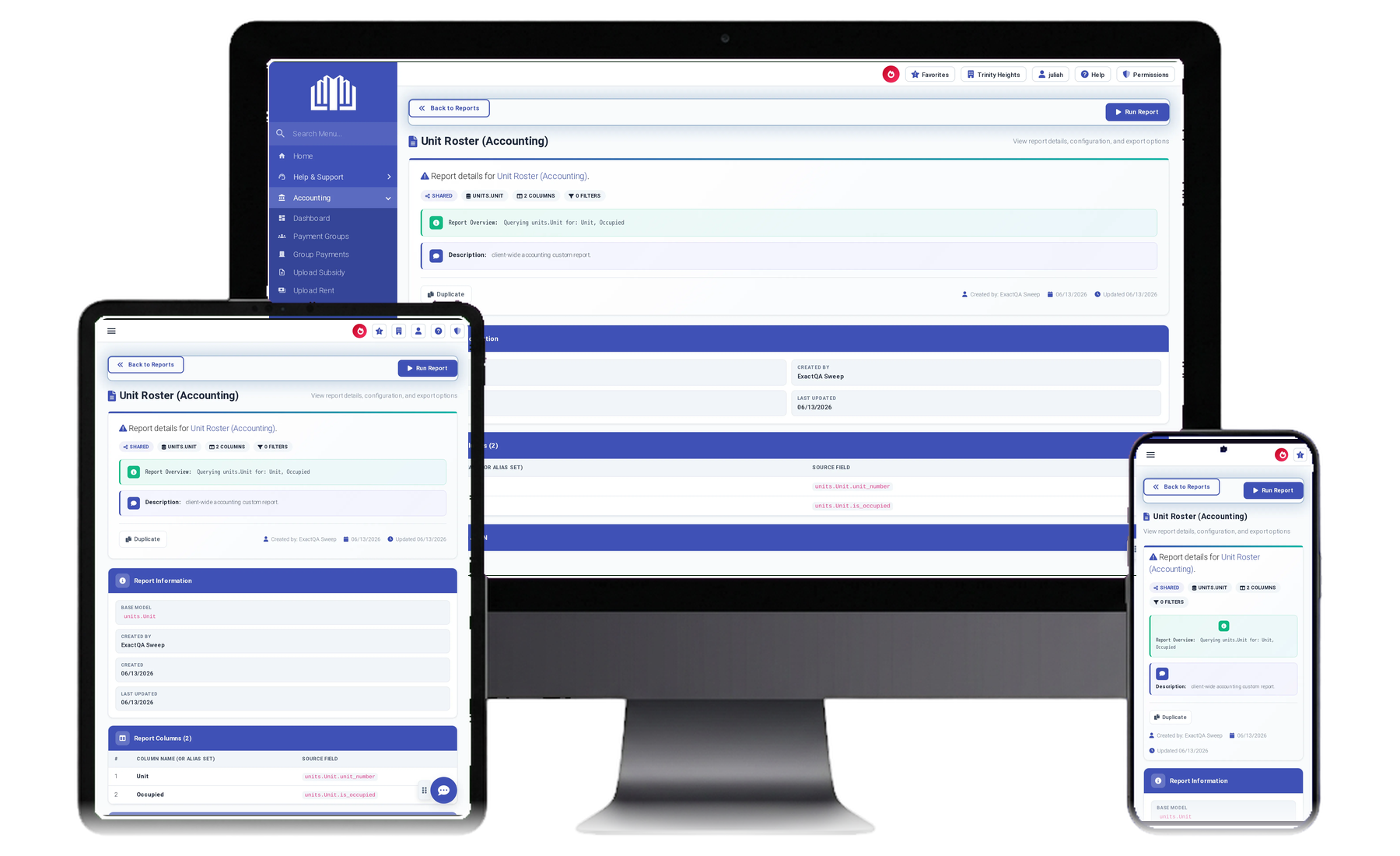
Ask EEva about this property's USDA configuration.
Ask EEva what applies to this property, and a good answer comes back in four parts. It gives the project and borrower identifiers the property is configured with, and what is currently blocking a certification or a filing. It also names the USDA source the answer rests on, and the workflow that comes next.
ExactEstate monitors authoritative HUD and Rural Development sources and stages relevant findings for a person to review. Ask for the USDA source behind the answer in the demo; the standard is a cited document, not a general memory of how rural housing programs usually work.
What it cannot confirm, it says it cannot confirm.