TRACS SOFTWARE · HUD MULTIFAMILY · 50059
Send TRACS clean 50059 data instead of cleaning up rejections.
ExactEstate builds and validates the HUD-50059 and 50059-A from the same household and property record your team already works, then sends TRACS MAT files over iMAX to the Contract Administrator.
Rigorous downstream edits are a reason to move validation earlier.
Why do TRACS rejections start weeks before transmission?
A TRACS rejection is usually a data problem that started weeks earlier: a household member missing, an income line that never got verified, an asset entered on the wrong record.
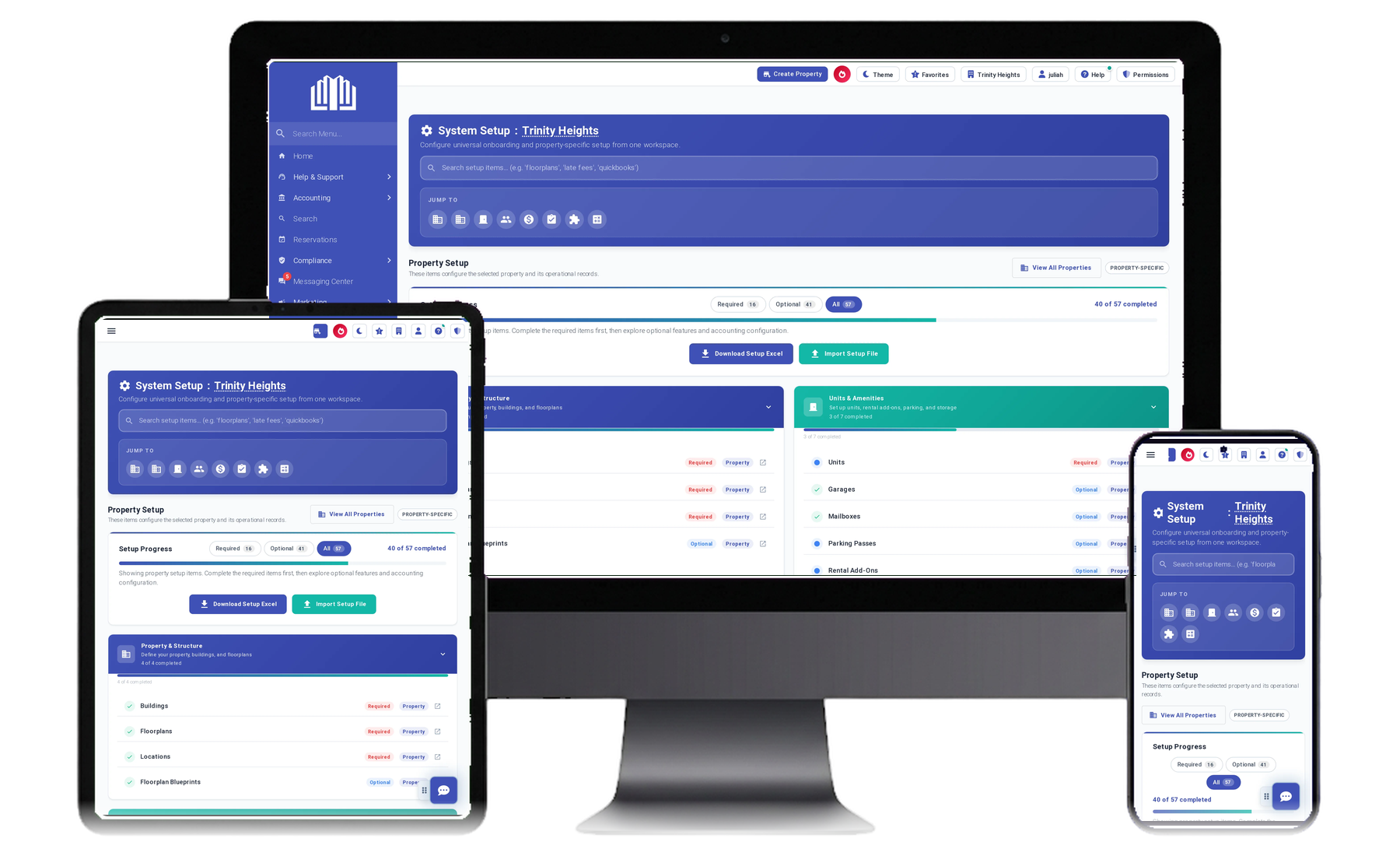
ExactEstate builds the HUD-50059 from the household, income, asset and deduction context the site team already keeps. So the certification is the outcome of the file rather than a form someone types from it.
What reaches TRACS is what the property record says. Fix it there, once, and the transmission inherits the fix.
One of those is a verification problem, and which rulebook governs it is itself a live question. Handbook 4350.3 REV-1 CHG-4 still governs the certification file. Notice H 2023-10 supersedes parts of it ahead of the January 1, 2027 Multifamily compliance date. Either way, 24 CFR 5.233 requires Enterprise Income Verification in the process that produced the income line. So the income nobody verified upstream can turn out to be the same income a Management and Occupancy Review asks about later.
Find the blockers before the monthly submission deadline.
The monthly deadline is the wrong time to learn a property is not ready.
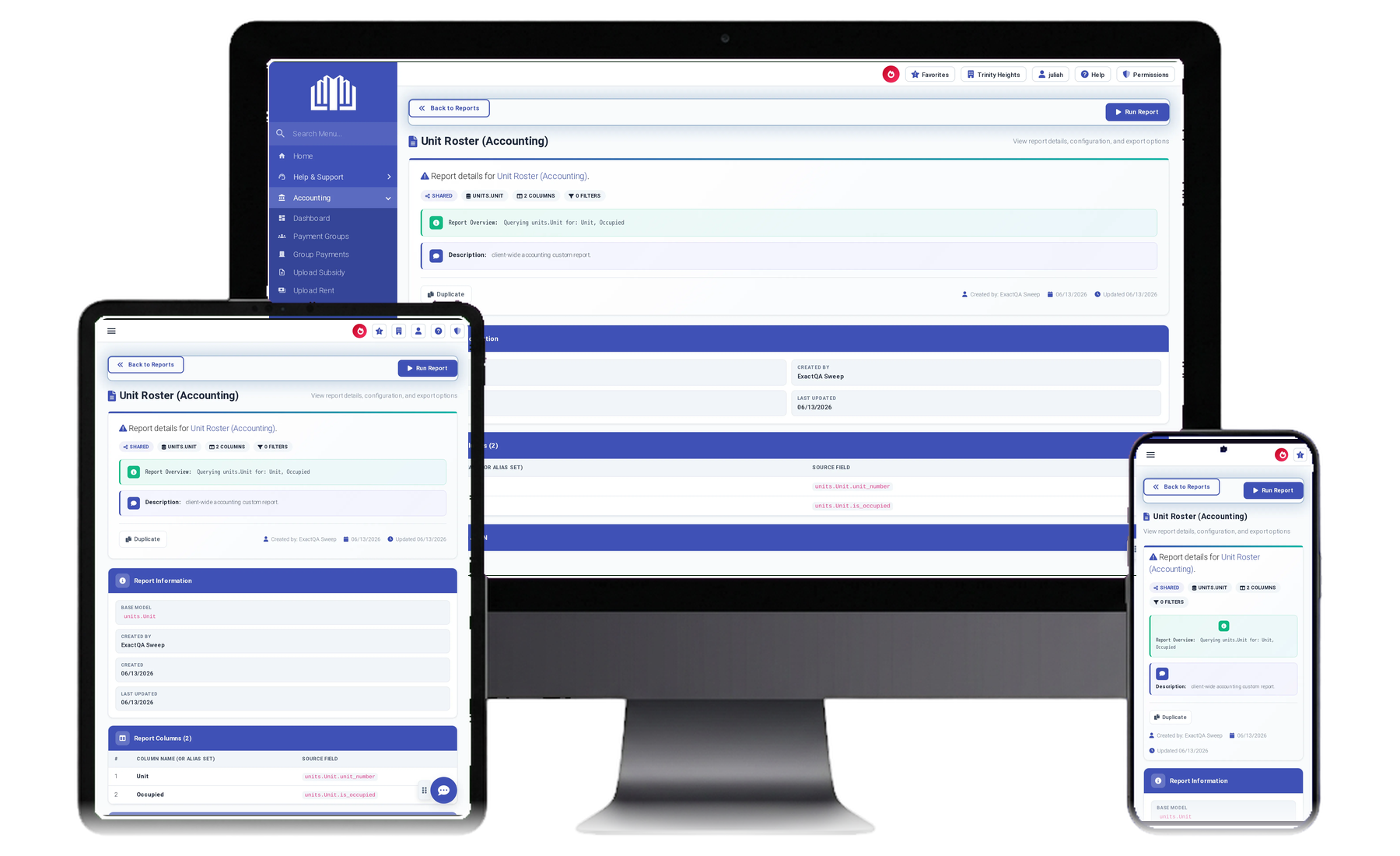
Readiness surfaces what is missing before the file is built, and it says which missing item is blocking which property. Examples include a property or contract identifier that was never set, or a configuration that does not match the contract. Another is a certification stuck waiting on a signature.
The work then becomes a list a person can clear, instead of a stack of rejections and discrepancy notices to reconcile after the fact.
How does ExactEstate’s TRACS software move the filing?
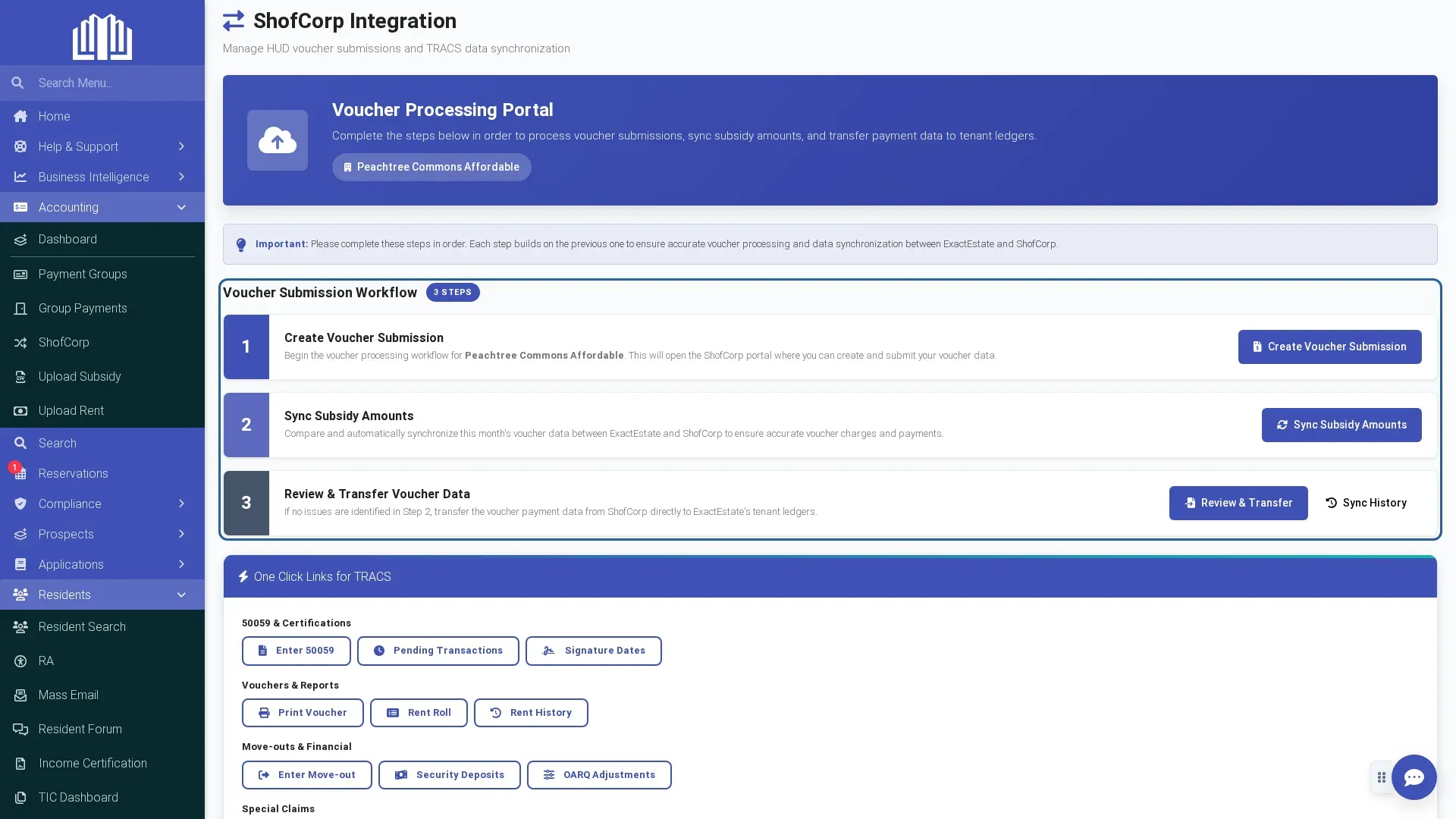
ExactEstate prepares and validates the HUD-50059 and 50059-A, a person on the property team approves the certification, and the TRACS MAT files go over iMAX to the Contract Administrator.
None of that is a single wire from a button to HUD, and this page will not describe it as one. It is a chain with named owners, and the certification history records who generated, approved and verified it.
Certifications and the resident ledger sit on one platform.
The certification decides the rent split: what the household pays and what the contract pays. In many portfolios that split then lives in two other systems, kept by two other people.
In ExactEstate, the certification, the resident ledger and the double-entry general ledger are on one platform. So when this month’s tenant rent differs from last month’s, the certification change behind it is on the same household record. Bring one to the demo and trace it.
Which TRACS version does ExactEstate prepare for?
TRACS 202D is the released HUD specification. The 203A MAT Guide is draft guidance out for stakeholder comment, and HUD states that the HOTMA provisions tied to 203A cannot be implemented until it officially publishes that release. HUD has separately extended the HOTMA compliance date for owners in the HUD Multifamily Housing programs to January 1, 2027.
Reviewed September 5, 2026 against HUD Notice H 2025-07 (issued December 17, 2025) and HUD’s iMAX External Stakeholder Notification of September 2, 2026. The 203A comment period closes October 2, 2026, and this section is re-read after that date.
ExactEstate prepares certifications to the released specification. It does not describe a draft as live.
Ask EEva what is blocking this property.
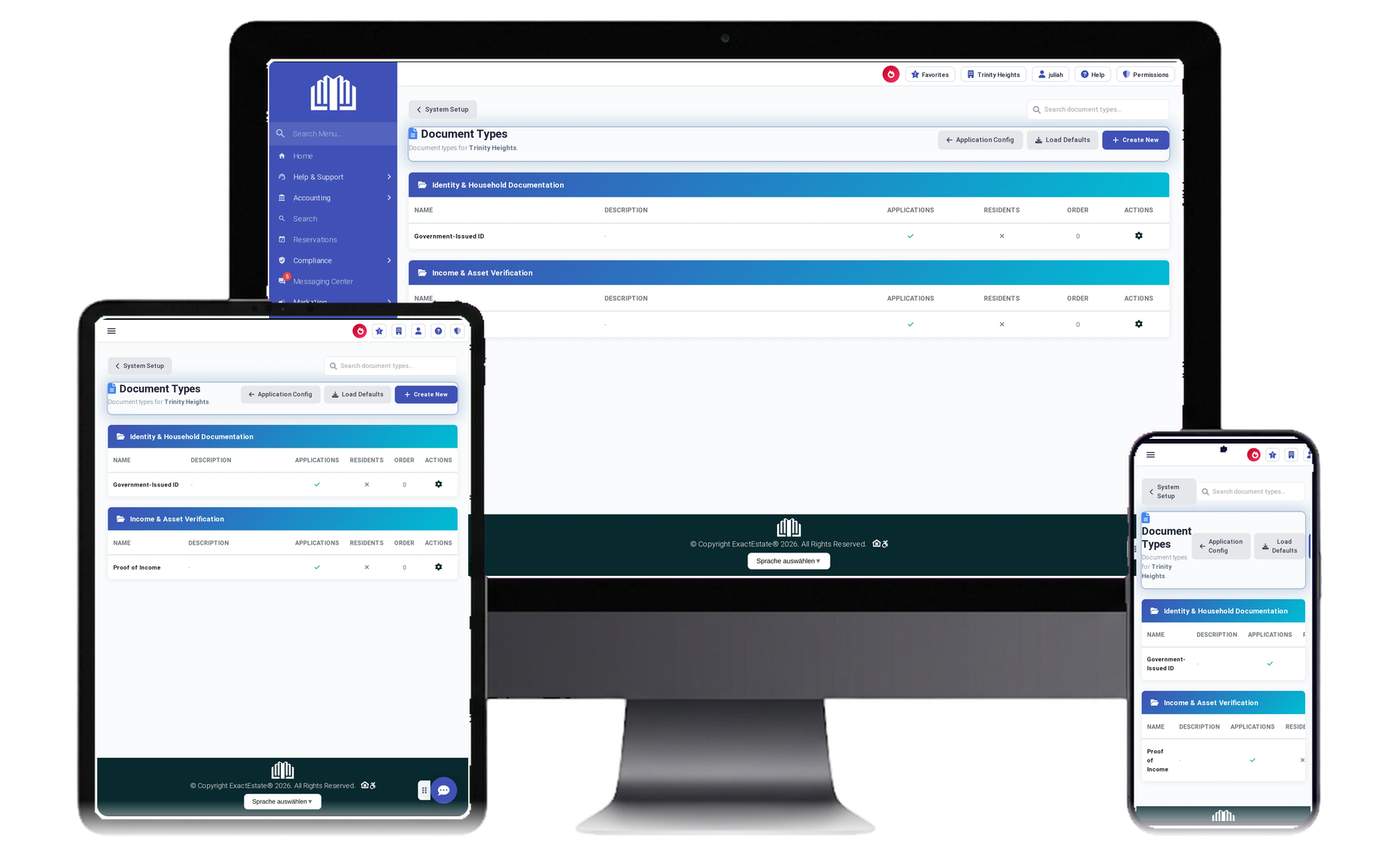
Its TRACS readiness is a question for EEva, and a good answer keeps two kinds of fact apart. One is what is true of this property — its configuration, its contract, its open certifications. The other is what is true because HUD says so, with the public source it came from.
ExactEstate monitors authoritative HUD and Rural Development sources and stages relevant findings for a person to review. A HUD fact in that answer is settled only when the source behind it is named, and the demo is the place to ask for that source.
A property fact you can fix today. A HUD fact you can cite tomorrow. Ask for an answer that keeps them apart.