Get the recertification packet signed where the work happens.
Send the IHBG recertification packet, rent-change letter and lease renewal for ExactSign e-signature from the household record. Residents and staff sign from their phones.
TRIBAL HOUSING · NAHASDA · IHBG · TDHE / IHA
For Tribal housing teams, Indian Housing Authorities (IHAs) and Tribally Designated Housing Entities (TDHEs): manage NAHASDA and Indian Housing Block Grant (IHBG) households using the Tribe’s adopted income definition, rent policy and worksheet—not a borrowed HUD Public Housing process.
Your Tribe makes the policy decisions. ExactEstate applies the ones you record and never substitutes its own.
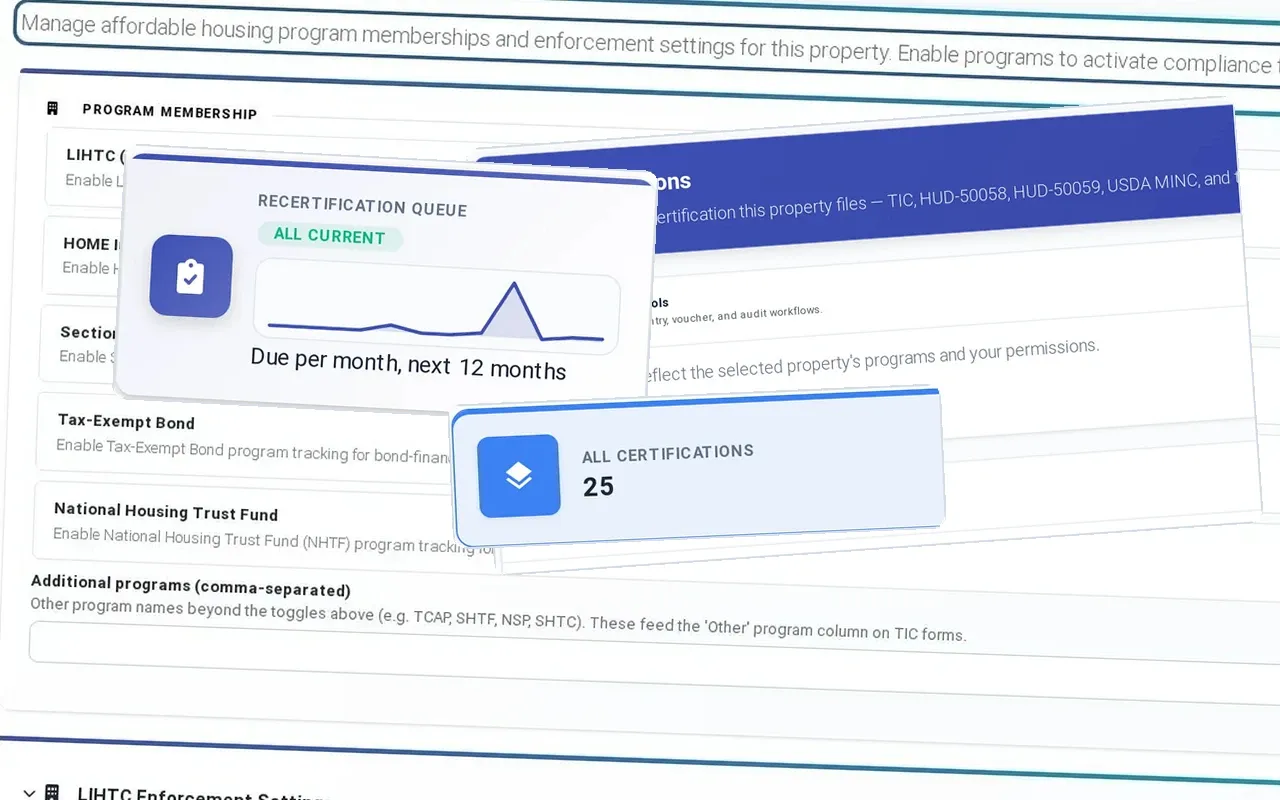
The Tribe’s income definition is a policy choice, not a setting software should guess. Record whether the program uses the Part 5, Census long-form or IRS AGI definition, and keep that decision next to the household file.
ExactEstate blocks an IHBG certification until that configuration is recorded and tells staff exactly what to add, so nothing downstream is calculated from a guess.
NAHASDA/IHBG is not HUD Public Housing in disguise. A Tribal housing team needs its own program record, rent policy, supporting evidence and worksheet, with the Tribe’s adopted choices respected.
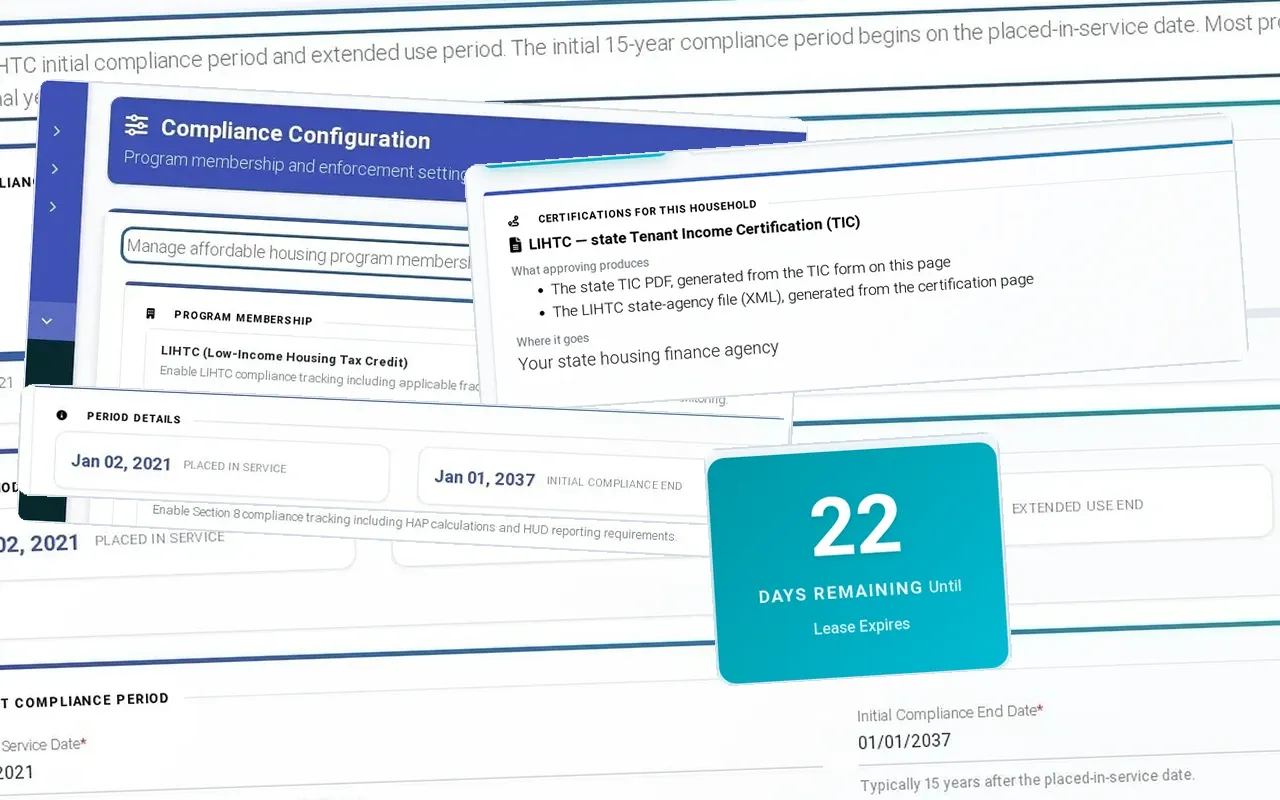
In ExactEstate, IHBG is one of five affordable housing compliance programs set per property, each with its own configuration section and its own certification form. Turning IHBG on does not turn on Public Housing, and an IHBG property does not inherit HUD-50058 screens, fields or submission behavior it was never subject to.
A property can also have LIHTC, HOME or other funding layers. Each program is configured on its own, so an IHBG property never picks up HUD-50058, TRACS or LIHTC rules just because the platform runs them.
The Tribe’s income definition is stored on the property, not inferred from a HUD program the property is not in. Certification is blocked until it is there.
Record the Tribe’s written rent policy, applicable minimums or maximums, adjustments and rounding rule. For low-income families in IHBG-assisted units, NAHASDA also limits monthly rent or homebuyer payments to 30% of adjusted income (25 U.S.C. § 4133(a)). ExactEstate applies the policy your Tribe adopted, not one generic formula for every Tribe.
The completed record keeps the definition, the policy and the household inputs behind every number. The worksheet PDF, the recertification packet and the rent-change letter are all produced from that locked record.
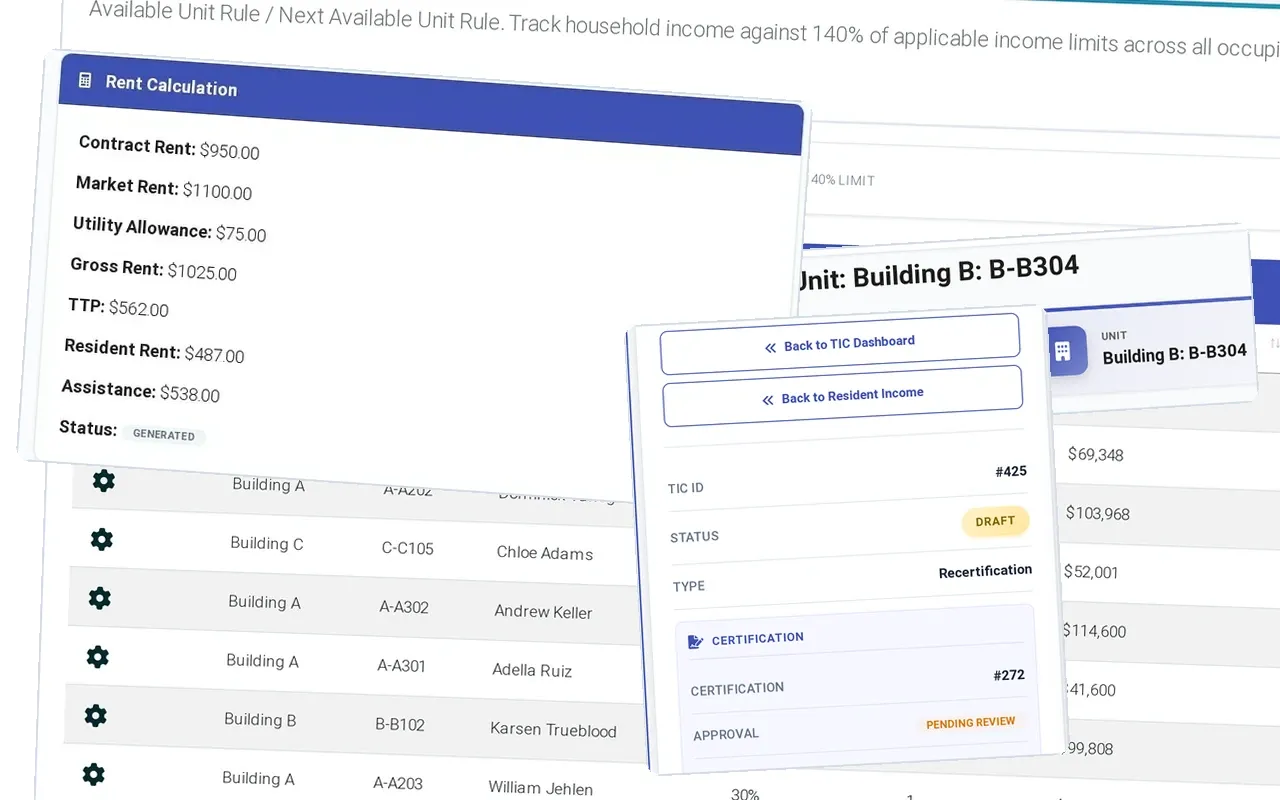
HUD Notice PIH 2024-37 set January 1, 2026 as the compliance deadline for Tribes and TDHEs using the 24 CFR Part 5 income definition—not a blanket IHBG date for every permitted income definition.
HOTMA changed the federal income rules, and the programs that answer to HUD adopted them on published schedules. IHBG does not work that way, because which rules apply depends on which income definition the Tribe elected.
So ExactEstate sets the HOTMA date by election: a property on the Part 5 definition follows HOTMA from January 1, 2026, and a property on the Census long-form or IRS AGI definition carries no HOTMA date at all.
If your current system gives a Tribal property a HUD Multifamily date, that is a setup error worth fixing before the next recertification.
Where your Tribe has adopted preference policies, ExactEstate keeps the category, documented basis and preference order behind each decision. An intake answer is never treated as verified enrollment.
Staff review the configured order against your Tribe’s approved policy before it ranks applicants, so no generic default stands in for your policy.
Tribal enrollment details live on the resident record as protected data: masked in the staff interface, excluded from the general data API, and validated so a resident marked as a Tribal member cannot be saved without an enrollment number.
The application can ask the Tribal questions directly, and the answers carry onto the resident record at move-in. Staff set the preference status: an applicant moves into a preference tier only when a person decides.
ExactEstate runs the household, the certification, the rent policy and the recertification packet, with the property’s ledger on the same platform.
An IHBG certification belongs in the Tribe’s own tenant file, and that is where ExactEstate keeps it, with no HUD or ONAP submission step to manage. ExactEstate works alongside the systems your housing department already uses for Indian Housing Plans and Annual Performance Reports in GEMS, Section 184 lending, Mutual Help conveyance and trust-land leasing.
Bring the workflows your evaluation depends on to the demo, and we will walk through each one.
EEva answers from the Tribe's recorded election and rent policy, names what blocks a certification, and asks when the answer is your Tribe's call.
When a fact is not on record, EEva says so instead of guessing.