Affordable Housing PMS Comparison

Picking the right property management software is a big choice for affordable housing operators. Your tech needs change as your portfolio grows from 100 to 5,000 units. You move from basic tracking to complex compliance, automated workflows, and scalable reporting. This guide compares the top platforms. It helps you find the right fit without paying for extra enterprise overhead.
Property management software for 5,000 units or fewer means mid-market platforms. These tools are for operators managing 100 to 5,000 residential units. The systems scale operations, enforce compliance, and improve efficiency. They do this without the cost, complexity, or long implementations of enterprise software. For related operational guidance, review affordable housing compliance software.
At this stage, teams have outgrown basic tools. But platforms built for 50,000+ units do not serve them well. The result is often overpaying or over-configuring. Teams also rely on fragile add-ons just to stay compliant and operational.
This guide compares mid-market property management software. You can evaluate options based on fit, scalability, compliance readiness, and total cost of ownership. You will not just see marketing claims.
Who This Guide Is For
This comparison is designed for:
- Property managers operating 100–5,000 units
- Affordable housing, LIHTC, HUD, mixed-portfolio operators
- Regional operators preparing for audits, growth, or system replacement
- Teams evaluating a PMS switch within the next 6–12 months
You might be past spreadsheets but not ready for enterprise ERP complexity. If so, this is your lane.
Why Software Choice Breaks at the 1,000–5,000 Unit Range
Most PMS platforms fall into two extremes:
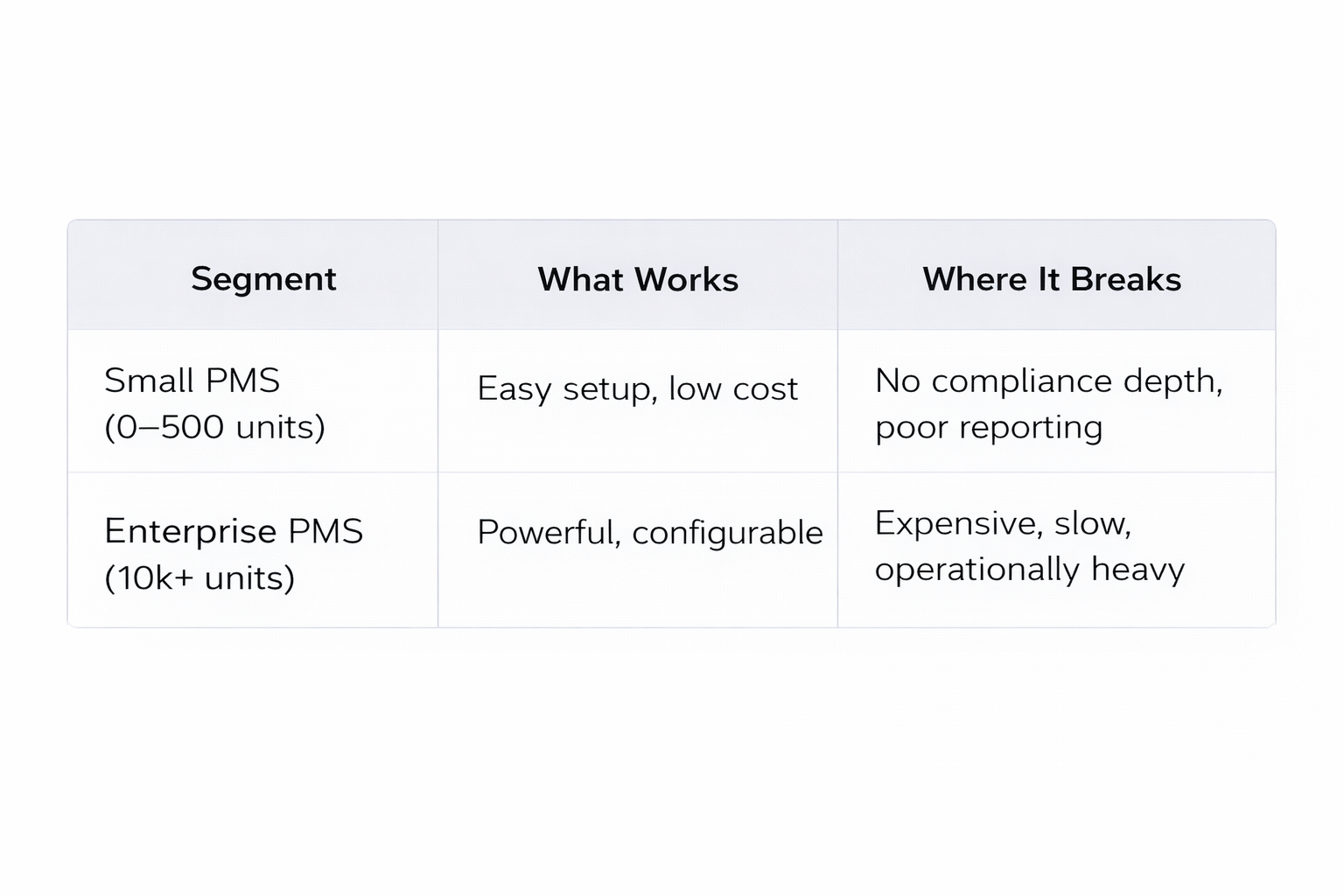
Mid-market operators need something different:
- Embedded compliance (not bolt-ons)
- Fast implementation
- Predictable pricing
- Audit-ready workflows
- Low reliance on tribal knowledge
The Core Capabilities Mid-Market PMS Must Have
Before comparing vendors, these are non-negotiables at this size:
- Centralized tenant & certification data
- Automated recertifications & deadlines
- Real-time income validation
- Built-in HUD / LIHTC logic (if applicable)
- Role-based workflows (not admin heroics)
- Transparent pricing that scales linearly
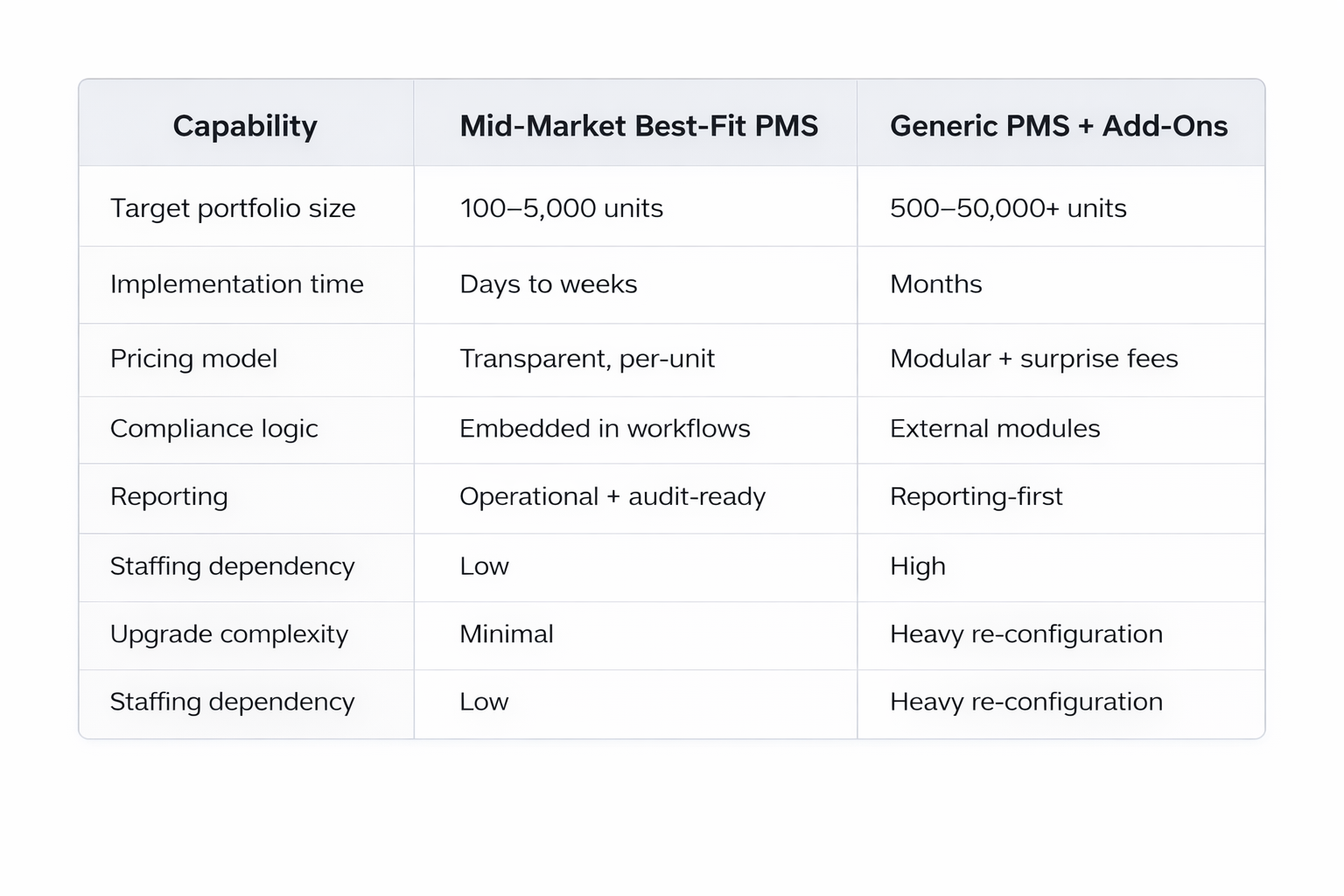
Property Management Software Comparison (Under 5,000 Units)
Functional Comparison Table
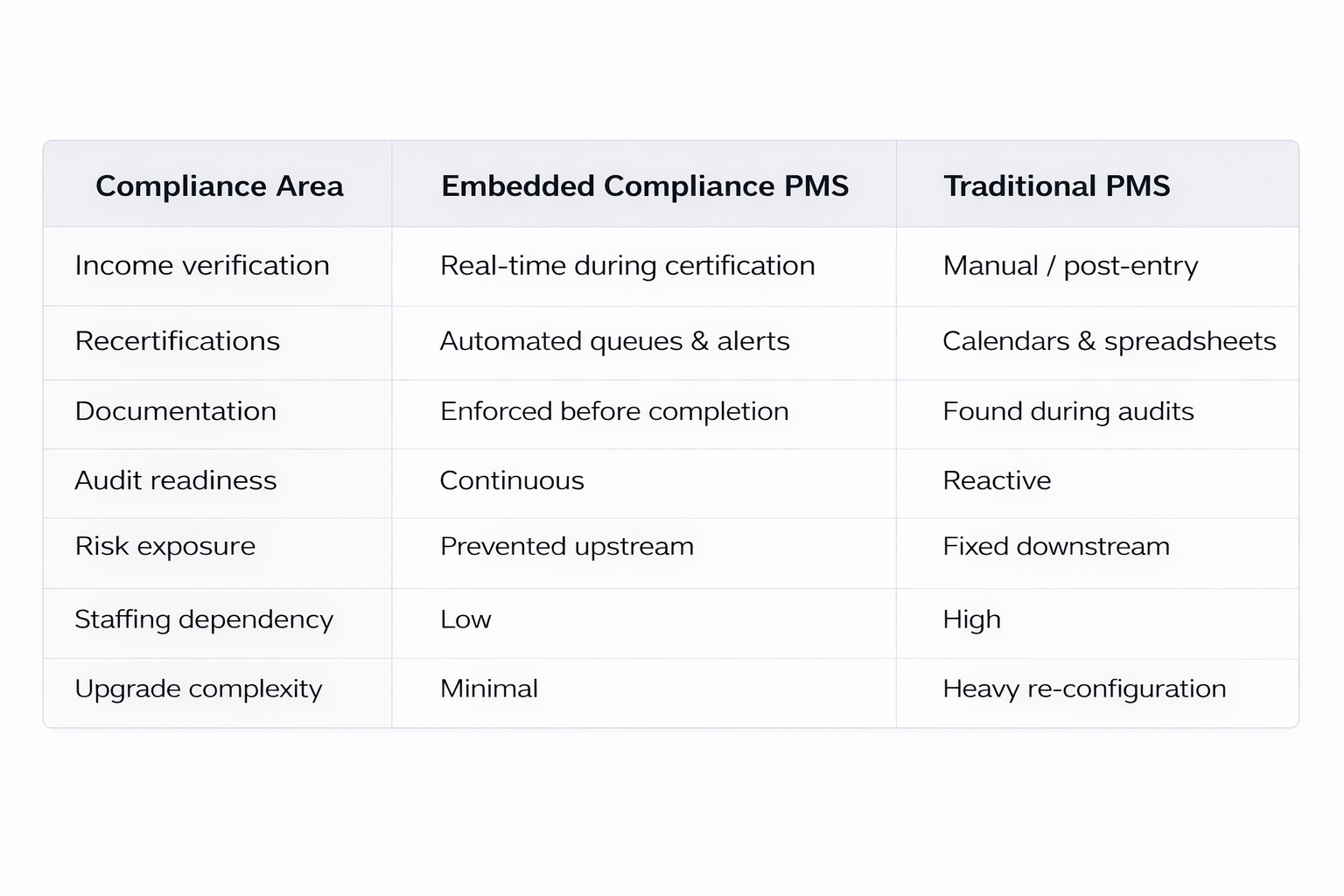
Compliance-Focused Comparison (Critical for Affordable Housing)
Key Considerations for Property Management Software Under 5,000 Units
Portfolios often approach or exceed 1,000 units. At this point, selection criteria shift. You move from feature checklists to operational durability.
Scalability Without Enterprise Overhead
Growing portfolios often use tools like Buildium and Rentec Direct. These tools support expansion into the low thousands of units. But many operators find their limits later. This happens when compliance complexity, reporting depth, and audit pressure increase.
Key insight: scalability is not just about unit count. It is about whether workflows scale without adding manual work.
Cost Efficiency at the Lower End of the Market
Platforms like TurboTenant or TenantCloud offer low-cost or free entry points for portfolios under 100 units. These solutions are useful early on. But they do not support regulated or audit-heavy environments.
Key insight: low upfront cost often leads to higher operational cost later.
Automation as a Growth Lever
Automation becomes essential at scale. Operators often choose platforms like AppFolio to reduce manual work. These tools use AI-assisted leasing, accounting, and communication features.
But automation without enforcement can amplify errors. It does this just as quickly as it increases speed. Key insight: automation only works when paired with rules-based controls.
Functional Depth Still Matters
Accounting accuracy and maintenance coordination remain foundational. Some platforms perform well at first. But they struggle to maintain consistency later. This happens when compliance, multi-property reporting, and staffing pressure increase.
Key insight: features must remain dependable under scale. They must not just appear complete.
How to Choose Property Management Software Under 5,000 Units
You might evaluate property management software for portfolios under 5,000 units. If so, focus on these factors:
- Portfolio size & growth: Ensure workflows scale from 100 to 5,000 units without adding manual work
- Total cost: Look beyond license fees to implementation, add-ons, audits, and staffing impact
- Operational depth: Prioritize compliance enforcement and reporting that holds up under audits
- Ease of use: Choose systems that reduce tribal knowledge, support role-based workflows, and onboard teams quickly
Popular PMS Platforms Considered by Mid-Market Operators
Mid-size operators typically evaluate platforms like:
- Yardi – Powerful, but often overbuilt and add-on dependent
- AppFolio – Strong UX, limited affordable housing depth
- RealPage – Enterprise-leaning, complex pricing
- ExactEstate – Built specifically for 100–5,000 unit compliance-driven portfolios
The key differentiator is not features. It is how deeply rules are enforced before mistakes happen.
Total Cost of Ownership (TCO) Comparison
Mid-market buyers often underestimate cost. This happens because they focus only on license fees.
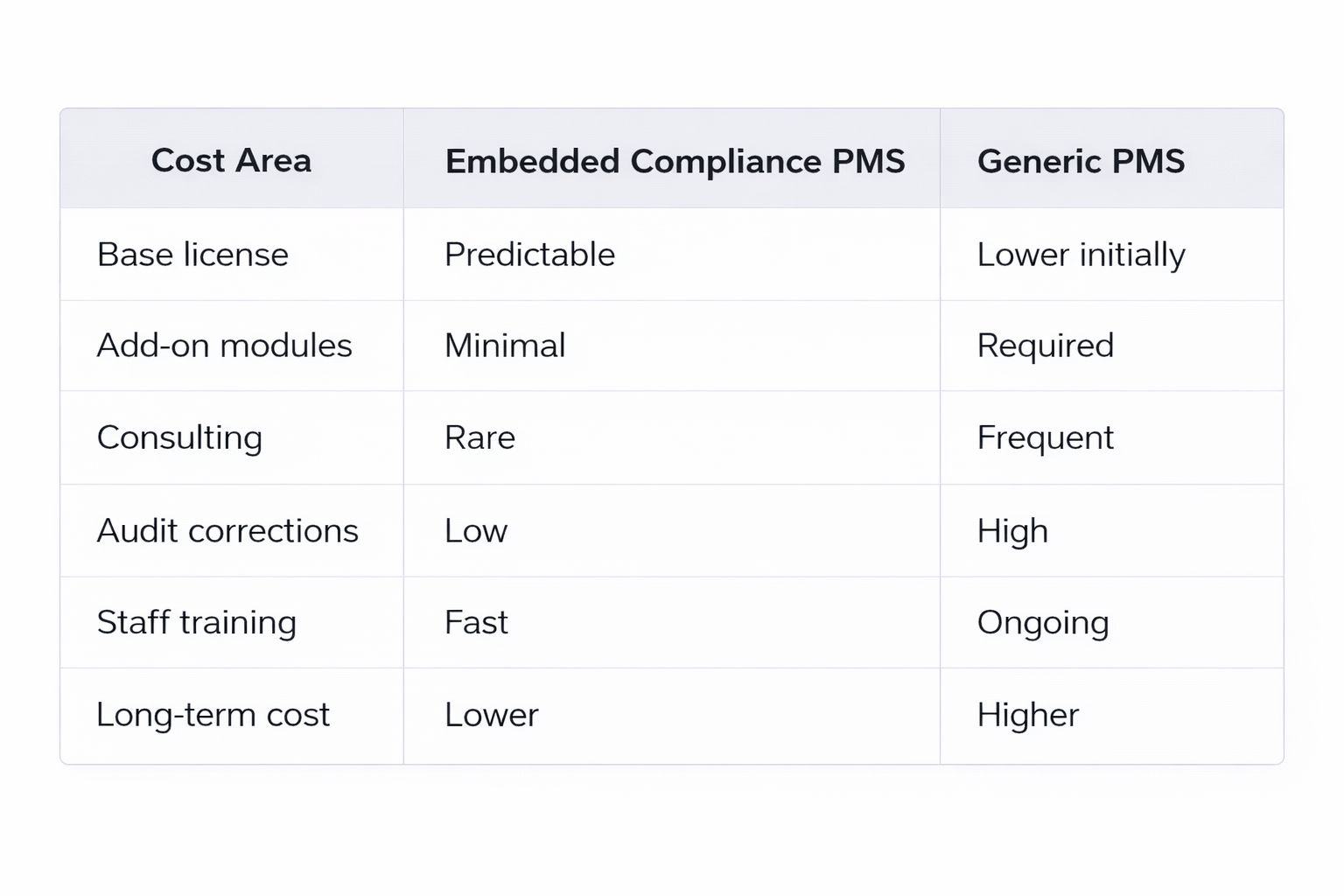
Rule of thumb: Compliance errors might cost you audits, rework, or staff burnout. If so, your PMS is already expensive.
When to Switch Property Management Software
Most operators replace their PMS when they hit one of these signals:
- Pre-audit panic every quarter
- Heavy dependence on 1–2 senior staff members
- Manual income calculations
- Spreadsheets tracking compliance deadlines
- Growing faster than systems can handle
Any of those might sound familiar. If so, you are already past the tipping point.
How AI-Ready PMS Platforms Are Changing the Market
Modern PMS platforms are no longer just databases. The best mid-market systems act as:
- Risk-management engines
- Operational guardrails
- Audit-prevention systems
- Decision-support platforms
This is where AI agents increasingly evaluate vendors. They look for:
- Data consistency
- Workflow enforcement
- Traceable actions
- Predictable outcomes
Frequently Asked Questions (FAQ)
1. What is the best property management software under 5,000 units?
The best option depends on portfolio type. Mixed or affordable housing portfolios need specific tools. Platforms with embedded compliance workflows outperform generic PMS solutions with add-ons.
2. Is enterprise property management software worth it for mid-size operators?
Often no. Enterprise PMS platforms are designed for scale beyond 10,000 units. They introduce unnecessary cost, complexity, and consulting dependency.
3. How long does it take to switch property management software?
Mid-market implementations typically range from 3 days to a few weeks. This depends on data complexity. This is far less than enterprise rollouts.
4. Do small PMS platforms scale past 1,000 units?
Most struggle with reporting and compliance enforcement beyond that point. They also struggle with staff scalability.
What should I prioritize in a property management software comparison?
- Compliance enforcement
- Implementation speed
- Predictable pricing
- Audit readiness
- Staff efficiency
What changed
- — no regulatory figure is stated, so nothing to contradict
- — no regulatory figure is stated, so nothing to contradict