Affordable Housing Centralization: 100-500 Unit Playbook

According to MRI Software's 2026 Multifamily Pulse report, 87% of multifamily operators are centralizing operations. Entrata just launched the "industry's first agentic PMS." NAA's spring leasing preview made centralization a top industry priority. It also highlighted staff deployment and concession management. For related guidance, review affordable housing compliance software.
The conversation is everywhere. The practical guidance is nowhere.
Large operators lead this talk. These include institutional REITs, 10,000+ unit portfolios, and enterprise PMS vendors. They centralize with resources mid-size operators lack. They have dedicated IT teams. They have six-figure implementation budgets. They have corporate offices with central leasing departments and call centers.
You might run 100–500 units across a few properties with a lean team. Centralization makes sense for you. But the enterprise playbook does not work for your scale. You need to know what centralization actually looks like for you.
This is the mid-size operator's centralization playbook. There are no buzzwords. There is no AI hype. It offers practical guidance on what to centralize first. It tells you what to leave alone. It shows how to make it work without hiring more staff.
What Centralization Actually Means at 100–500 Units
Let's start with what centralization doesn't mean for a mid-size operator.
It does not mean building a central leasing call center. It does not mean replacing on-site staff with an AI answering system. It does not mean a corporate office managing every property remotely.
At 100–500 units, centralization is much simpler. It means cutting redundant work. This work happens when every property operates as an island.
Right now, your properties probably handle their own tasks. They manage their own leasing inquiries and maintenance dispatch. They set up their own payment processing and compliance tracking. They handle their own vendor relationships. Each property manager reinvents the same workflows. Each new hire learns a slightly different process. Each property creates its own workarounds for the same software limits.
Centralization at your scale means standardizing workflows. It means consolidating data so it is visible portfolio-wide. It means automating tasks that do not need a human. This lets your on-site team focus on work that actually requires them to be on-site.
The goal isn't to remove people from properties. It's to remove unnecessary work from people.
What to Centralize First (The Priority Stack)
You should not centralize everything at once. Some functions benefit right away. Others need infrastructure first. Here is the order that works for most mid-size operators.
Priority 1: Online Payments and Financial Visibility
Your properties might still collect paper checks. They might handle payments through property-specific processes. If so, this is your single fastest win.
Centralized online payment processing uses one platform across all properties. It gives you instant portfolio-wide visibility into collections, delinquency, and cash flow. Residents get consistent payment options no matter where they live. Auto-pay enrollment goes up. Late payments go down. Your accounting team stops reconciling multiple systems.
This step causes the lowest disruption. It brings the highest immediate return. Start here if you have not done this yet.
Priority 2: Maintenance Dispatch and Work Order Tracking
Maintenance wastes the most staff time on coordination. It does not waste time on actual maintenance work.
A central work order system makes residents submit requests the same way. They ideally use a portal to reduce phone calls. Every work order is logged, assigned, and tracked in one place. Recurring preventive maintenance schedules run automatically. Your maintenance team's workload is visible across all properties. It is not siloed.
You might manage 3–8 properties with a shared maintenance team. Central dispatch is the key to planned, efficient operations. It stops you from just reacting to crises.
Priority 3: Leasing and Prospect Management
Institutional operators spend the most money here. But mid-size operators can get 80% of the benefit at 10% of the cost.
You do not need a centralized leasing call center. You need a single system for every prospect inquiry. This includes website visits, listing services, walk-ins, and phone calls. All leads enter the same pipeline. Lead follow-up is automated. It does not rely on your on-site manager remembering to call back. You can see vacancy and leasing velocity across your entire portfolio on one screen.
Listing syndication from a single platform keeps unit availability current. This includes Rentpath, Apartments.com, and ILS feeds. Online applications let prospects apply on their own schedule. They do not have to apply during office hours. Automated follow-up keeps leads warm. No lead goes cold just because someone was busy showing a unit.
Priority 4: Compliance and Recertification Tracking
This is Priority 1 for affordable housing operators. It is listed here for a reason. Many 100–500 unit operators run mixed portfolios. They have both affordable and conventional units.
Centralized compliance tracking is non-negotiable if you run affordable units. You must manage recertification deadlines and income certification status from one dashboard. TRACS submissions and program-specific rules must be visible there too. Do not track them in property-specific spreadsheets. Do not track them on an office whiteboard.
Automated recertification reminders trigger 120, 90, 60, and 30 days before due dates. They eliminate the most common compliance failure in affordable housing. This failure is missing a deadline because someone forgot.
You might run purely conventional units. Centralized lease renewal tracking still applies. Move-in/move-out scheduling and resident communication templates still apply. The compliance urgency is lower. But the operational efficiency gain is the same.
Priority 5: Reporting and Portfolio Analytics
This centralization step unlocks everything else. Your payments, maintenance, leasing, and compliance data all live in one system. You can run consolidated reports across your entire portfolio. You do not need to export to Excel. You do not need to manually combine spreadsheets.
Consolidated income statements, cross-property delinquency tracking, portfolio-wide occupancy trends, and budget vs. actual variance reporting are essential. These reports should be available with a few clicks. They should not take hours of manual work.
Owner and investor reporting gets much simpler here. You stop generating separate financial packages for each property. You stop manually assembling portfolio views. A centralized system automatically generates consolidated reports.
What to Leave Decentralized
Not everything benefits from centralization. Some functions work better when they stay on-site and property-specific.
Resident relationships matter most. The on-site manager's bond with residents is the core of property management. Centralizing this damages retention and resident satisfaction. Do not replace it with AI chatbots or call center scripts. Centralize the administrative burden instead. This gives your on-site team more time for relationships.
Property-specific vendor relationships are also key. Your vendor database can be centralized. But actual vendor relationships work best on-site. This is especially true for maintenance. Your on-site team interacts with these vendors. They know which plumber is reliable. They know which one overbills.
Emergency response must stay local. A pipe might burst at 2 AM. The response needs to be on-site. It should not route through a centralized system. Centralize the documentation and tracking of emergency work orders later. Keep the actual response local.
Community-specific programming is vital. Events, amenity management, and resident engagement work best when tailored to each property. Centralize the tools like the calendar and reservation system. Centralize the communication platform. But keep the programming decisions local.
The Software Question: What Makes Centralization Viable at Your Scale
Most 100–500-unit operators have not centralized. There is an uncomfortable truth behind this. Their software does not support it.
You might run a PMS designed for single-property management. It might have multi-property features bolted on later. Centralization means fighting your software at every step. You face separate logins per property. You lack consolidated reporting. You lack cross-property visibility. You deal with Payment processing set up independently for each property.
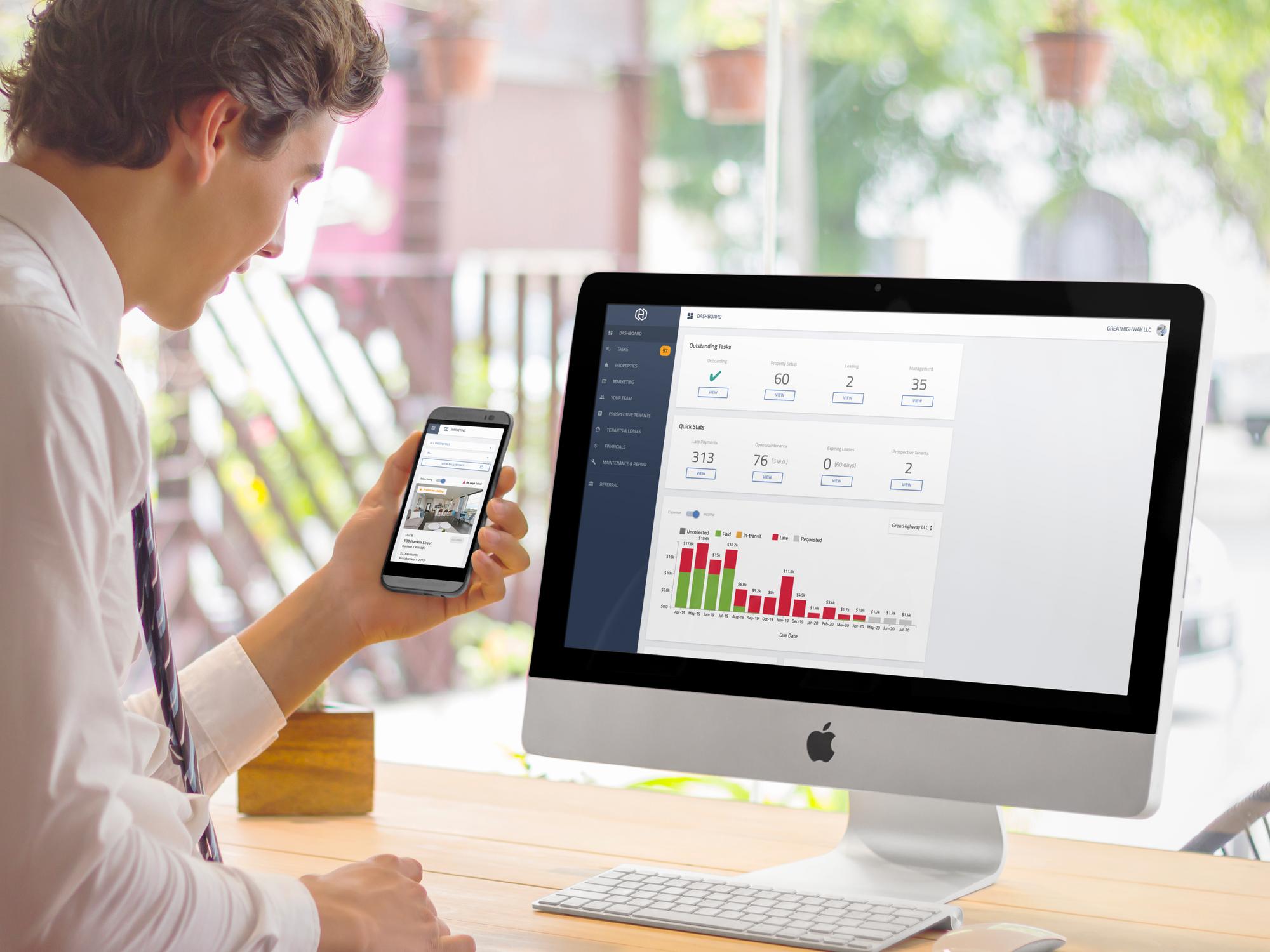
Centralization at the 100–500 unit scale requires a specific platform. It must be built for multi-property operations from the start. It needs portfolio-wide dashboards. These show occupancy, delinquency, work orders, and compliance status. All this data appears on one screen.
Consolidated financial reporting is also required. This includes income statements, trial balance, T-12, and cash flow. These must support multi-property selection. You should not need manual export and combination.
Centralized resident portals are essential. You need one platform for payments, work orders, and communication. This applies regardless of where a resident lives.
Cross-property compliance tracking is necessary. Recertification schedules and certification status must be visible portfolio-wide. Program-specific rules must be visible too. They should not be limited to per-property views.
Consistent workflows are critical. You need the same leasing process at every property. You need the same payment processing and maintenance dispatch. This means training is done once. Staff can move between properties seamlessly.
Your current software might require a different workflow for each property. It might need a different configuration for each one. If so, you are not centralizing. You are just accessing multiple single-property instances from one login.
The Staffing Math: Centralization Without Hiring
Mid-size operators often object to centralization over headcount. They say they lack the staff to manage a project. But centralization at your scale does not create new positions. It recovers time your existing team loses to redundant work. Think about the time your staff spends on manual processes. A centralized platform would eliminate this work.
Think about manual rent posting. An automated rent generation system handles this. Think about late fee calculation. An automated system handles this with configurable rules. Think about recertification notice generation. An automated system generates these at 120, 90, 60, and 30 days before due dates. A single payment platform eliminates payment reconciliation across multiple systems. Consolidated reporting replaces report compilation from multiple property-specific exports.
Consider a 300-unit portfolio across 3–5 properties. The conservative estimate is 15–25 hours per week of redundant administrative work. Centralization eliminates this work. That is not a new hire. That is a part-time position worth of capacity recovered from your existing team.
The recovered time goes where it creates the most value. This includes resident relationships and leasing follow-up. It includes property condition and operational judgment calls. These tasks require a human on-site.
The 90-Day Centralization Roadmap
If you're ready to start, here's a realistic timeline for a 100–500-unit operator.
Days 1–14: Evaluate your current software against the multi-property requirements listed above. It might not support consolidated operations. If so, evaluate alternatives and select a platform. Implementation on a modern platform takes days, not months.
Days 15–30: Centralize payments and financial visibility. Get all properties on one payment platform. Set up auto-pay. Establish consolidated financial reporting. This is the fastest win with the lowest risk.
Days 31–45: Centralize maintenance dispatch. Move all properties into a single work order system. Set up resident portal submission. Configure recurring maintenance schedules. Train your maintenance team on the new workflow.
Days 46–60: Centralize leasing and prospect management. Consolidate listing syndication. Set up a single prospect pipeline. Configure automated follow-up. Enable online applications across all properties.
Days 61–75: Centralize compliance tracking (if applicable). Configure program-specific rules per property. Set up automated recertification reminders. Establish cross-property compliance dashboards.
Days 76–90: Optimize and measure. Run consolidated reports. Identify the time savings. Adjust workflows based on what your team has learned. Establish the operating rhythms that will sustain centralized operations going forward.
The Bottom Line
Centralization isn't a technology initiative. It's an operations decision.
Institutional operators with 10,000+ units figured this out years ago. The 100–500 unit operators who figure it out in 2026 will gain the same efficiency advantages. They will do this without the enterprise overhead.
Most mid-size operators lack one thing for centralized operations. They need software designed for centralized operations. Everything else follows from the choice of platform. This includes the workflows, the training, the reporting, and the resident experience.
Stop running each property as an island. Your portfolio is a business. Manage it like one.
1. What is property management centralization?
Property management centralization standardizes workflows and consolidates data. It manages key functions across multiple properties from a single platform. These functions include leasing, maintenance, payments, and reporting. The goal is to reduce duplicate work. It improves visibility and increases operational efficiency.
2. What should property managers centralize first?
Most operators see the fastest results by centralizing key tasks. These include online payments, financial reporting, maintenance tracking, and leasing operations. These functions often involve repetitive administrative tasks. Automation and standardized processes can streamline them.
3. Does centralization require a centralized leasing call center?
No. Mid-size operators can benefit from centralization without a dedicated leasing call center. Automated lead follow-up and online applications improve leasing performance. Listing syndication and centralized prospect management help too. This allows on-site teams to focus on resident interactions.
4. How can centralization help affordable housing operators?
Centralization helps affordable housing operators manage compliance requirements more efficiently. It provides portfolio-wide visibility into certifications and recertifications. It tracks deadlines and reporting requirements. Automated reminders and centralized compliance tracking reduce risks. They prevent missed deadlines and manual errors.
5. How much time can property management centralization save?
Centralization eliminates redundant administrative work. This includes manual reporting, payment reconciliation, work order coordination, and compliance tracking. It saves property management teams significant time each week. Staff can focus more on resident service, leasing, and property operations. They spend less time on paperwork.
ExactEstate's multi-property platform makes centralization simple. It uses one dashboard, one payment system, and one compliance engine across your entire portfolio. See how it works.
What changed
- — no regulatory figure is stated, so nothing to contradict