3-Click Property Management for Affordable Housing
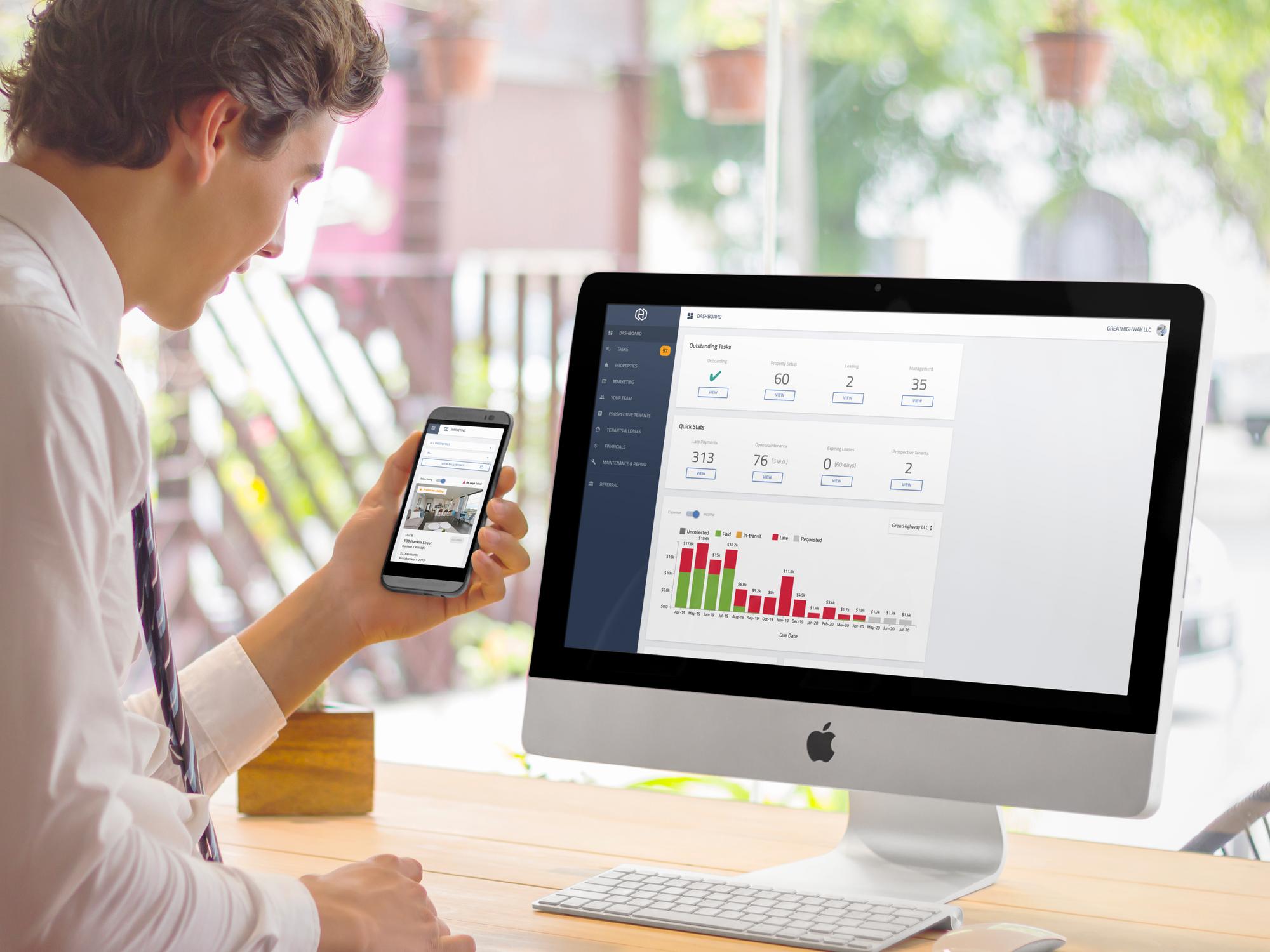
3-click property management for affordable housing is a software design standard ensuring that core operational tasks take no more than three user interactions to complete, minimizing data-entry errors and accelerating workflows. This efficiency is critical when verifying a family whose annual income does not exceed 80 percent of the median income for the area, as determined by HUD with adjustments for smaller and larger families, except that HUD may establish income ceilings higher or lower than 80 percent of the median income for the area on the basis of HUD's findings that such variations are necessary because of unusually high or low family incomes (24 CFR 5.603). Reducing clicks directly protects margins.
The math gets worse when you scale.
When your portfolio triples from 50 to 150 units, manual workload often multiplies by 5 or more due to duplicated effort, error correction, and chasing down siloed data across multiple systems.
This isn't a software problem. It's a design problem.
The Hidden Cost of Complex Software
Most property management systems were built by programmers who've never walked a unit or filed a compliance report. They prioritize features over usability. The result? Software that technically does everything but, in practice, slows everything down.
The average property manager spends 10–15 hours per month per property on management tasks when using spreadsheets and manual processes. That's not just time. That's money, missed opportunities, and staff burnout.
Meanwhile, many affordable housing operators — and conventional ones — rank operational efficiency as their number one challenge. They're not asking for more features. They're asking for systems that actually work the way property management works.
What the 3-Click Rule Actually Means
The three-click rule started as a web design principle: users should be able to reach any piece of information within three clicks. But the research behind it reveals something more useful than a click count.
The number of clicks matters less than cognitive load.
What frustrates users isn't clicking three times versus five times. It's clicking, but you don't know if you're getting closer to your goal. It's navigating through unclear menus. It's wondering if you're in the right place.
The real principle is this: task paths should be progressive and intuitive, so users feel they're moving toward their goal with minimal mental effort.
For a property manager juggling maintenance requests, lease renewals, compliance deadlines, and resident calls — all before noon — cognitive load is the real cost. Every unnecessary step, every screen that requires a decision, every field that asks for information you've already entered elsewhere: that's the friction that turns a 5-minute task into a 20-minute one.
The 3-click test is a practical way to evaluate any workflow: can a trained staff member complete this task in three meaningful steps, without hunting through menus or switching to another system? If the answer is "well, first you need to..." the software is the problem.
Where Most Systems Fail the Test
Consider the most common leasing workflow: processing a qualified rental application.
In a typical disconnected system, this requires logging into a separate screening portal, manually entering applicant data already collected in the PMS, waiting for results, re-entering approved information into the lease system, generating documents from templates that need manual editing, emailing back and forth for signatures, manually updating unit availability across listing sites, and finally marking the unit occupied in the accounting system.
Properties using integrated systems routinely process qualified applicants in under 24 hours. Those using disconnected or manual processes often take 7–10 days. In competitive rental markets where qualified prospects are submitting multiple applications simultaneously, the property that responds first has a structural advantage.
That's not a marginal efficiency gain. It's a leasing outcome.
The same pattern holds across every core workflow. Maintenance requests that require a phone call, a work order, a vendor call, and a follow-up. Compliance tracking that lives in a spreadsheet because the PMS can't generate the right report. The owner reports that it requires exporting from three systems and reformatting in Excel.
In each case, the software isn't broken. It's just designed for data entry, not for the way property management actually works.
The 3-Click Standard Applied: Core Workflows
Here's what the 3-click standard looks like in practice across the functions that consume the most staff time.
Leasing and Applications
A streamlined leasing workflow starts with a prospect submitting an inquiry and ends with a signed lease — with as few handoffs as possible.
That means: one platform where every inquiry enters the same pipeline regardless of source. Automated follow-up so no lead goes cold while your team is doing a move-in walkthrough. Online application prospects can complete on any device, at any time, without visiting the office. Integrated screening that returns results in minutes from within the application workflow. Auto-generated lease documents. E-signatures. And unit availability that updates automatically across listing channels the moment a lease is signed.
The 3-click test for leasing: can a leasing agent move a prospect from approved to lease-sent in three steps, without logging into a separate system? If not, you're unnecessarily adding days to your leasing cycle.
Maintenance and Work Orders
Operators across property types — conventional, affordable, mixed-income — consistently rank work order management as one of their most time-consuming administrative functions. The reason is rarely the volume of requests. It's the coordination overhead: phone calls to confirm receipt, emails to assign vendors, follow-up calls to check status, manual updates to close out tickets.
A 3-click maintenance workflow looks like this: the resident submits a request through the portal with a photo and description. The system categorizes by urgency and routes to the right vendor or in-house tech automatically. The technician updates the status from their phone. The resident gets an automated notification. The work order closes with a timestamp and photo documentation.
No phone tag. No email chains. No wondering if something fell through the cracks. The 3-click test for maintenance: can a property manager assign and confirm a work order without picking up the phone or switching systems?
Compliance and Certification Tracking
For affordable housing operators, compliance is where software failures carry the highest cost. Missed recertification deadlines, incomplete documentation, and manual tracking errors don't just create administrative headaches — they create audit exposure and program risk.
But the compliance burden isn't unique to affordable housing. Conventional operators face lease renewal tracking, move-in/move-out documentation requirements, and fair housing compliance obligations that add to their administrative load.
A 3-click compliance workflow means: automated reminders at 120, 90, 60, and 30 days before certification deadlines. Certification status visible across the entire portfolio on one screen. Audit-ready documentation generated directly from the PMS without reformatting. For affordable housing specifically: income certification tracking by household, program-specific rule sets, and TRACS submission support built into the platform.
The 3-click test for compliance: Can a compliance manager pull a portfolio-wide certification status report without exporting to Excel?
Financial Reporting and Owner Communication
Manual report compilation is one of the most consistent time drains in mid-size property management. When financial data lives in property-specific exports that need to be combined in a spreadsheet before anyone can read them, reporting becomes a project rather than a function.
A 3-click financial workflow means consolidated income statements, delinquency tracking, and budget-vs.-actual variance reporting across all properties, available from a single dashboard. Owner reports are generated automatically on schedule. No manual formatting, no cross-referencing between systems.
The 3-click test for reporting: can a portfolio manager generate a consolidated financial report across all properties in under five minutes, without touching a spreadsheet?
The Staff Retention Connection
Property management staff turnover is persistently high — with positions taking an average of six weeks or more to fill. Software is part of that story.
When staff spend their days fighting clunky systems, doing duplicate data entry, and hunting through nested menus for basic functions, the job feels harder than it needs to be. When new hires face weeks of training just to process a routine work order, they question whether the learning curve is worth it.
Intuitive systems reduce training time from weeks to days. They make new staff productive immediately rather than eventually. They make experienced staff's jobs easier rather than adding to their cognitive load.
The efficiency gain from better software isn't just in hours saved per task. It's in the reduced turnover, faster onboarding, and higher job satisfaction that come from tools that actually help instead of hinder. For operators managing lean teams, that multiplier matters.
Building an Effective Property Management Tech Stack
Property management software centralizes and automates daily workflows, reducing manual tasks, eliminating double bookings, and boosting overall operational efficiency. It enables property managers to scale their portfolios without a proportional increase in administrative burden.
A streamlined property management tech stack relies on these core components:
Core Operational Automations
- Maintenance Management: Automates the lifecycle of work orders from digital tenant requests to vendor dispatch and real-time status updates.
- Financial Accounting: Handles automated rent collections, late fee applications, expense tracking, and generates tax-ready financial reports.
- Leasing & Marketing: Manages listings, automated tenant screening, digital lease creation, and electronic signature collection.
- Cleaning & Task Coordination: Syncs with your booking calendar to auto-schedule cleaning and turnover tasks and track staff bandwidth.
Key Centralized Portals
Tenant Portal: Allows residents to pay rent, view balances, and submit maintenance tickets 24/7.
Owner Portal: Keeps property owners informed with automated financial performance reporting and live updates.
Vendor Portal: Grants external contractors access to view and update the status of assigned work orders.
The challenge isn't finding software that claims to offer these features. It's finding systems that integrate them seamlessly without requiring you to become a systems administrator.
Different portfolio sizes demand different approaches:
- Independent landlords and small portfolios benefit from accessible entry-point platforms that handle essential functions without overwhelming complexity.
- Growing and mid-size portfolios need dedicated maintenance and accounting tools that can scale with increasing unit counts and operational demands.
Enterprise and tech-forward teams require advanced features such as AI-driven leasing and comprehensive real estate lifecycle management spanning multiple properties and complex organizational structures.
The key is to match your current needs with room to grow — without paying for enterprise features you won't use for years or locking yourself into systems that can't scale when you're ready to expand.
What to Look for When Evaluating Systems
When evaluating property management software, skip the feature demo. Run these scenarios instead:
- Can you process a maintenance request from submission to vendor assignment without a phone call? If the answer involves "well, first you need to log into..." the system isn't streamlined.
- Can you generate a compliance or financial report without exporting to Excel? If you're still doing manual formatting, the automation isn't real.
- Can new staff complete routine tasks on day one without calling support? If your team needs more than a few days of training for basic functions, the interface isn't intuitive.
- Can you access everything you need from your phone? Property management doesn't stop at 5pm. Your software shouldn't either.
- Does the platform handle your property types without workarounds? Conventional, affordable, and mixed-income portfolios have different requirements. A platform that handles all of them without bolt-on modules or manual workarounds is a different category of tool than one that was built for one type and adapted for others.
The Implementation Reality
Streamlined software only delivers value if you can actually implement it without months of downtime and consultant fees.
Properties that switch systems successfully share common patterns:
- Data migration handled by the vendor, not dumped on your team
- Training that's role-specific, not generic
- Support from people who understand property management, not just software
- Go-live measured in weeks, not months
The horror stories about six-month implementations come from vendors who treat software as a product rather than a service — they hand you the keys and disappear. Real streamlining includes the implementation process itself.
Making the Business Case
When presenting a software change to ownership or the board, the conversation should focus on measurable outcomes, not features.
- Time savings: Calculate current hours spent on administrative tasks. Apply a realistic efficiency improvement. Show the annual dollar value of recovered capacity.
- Faster leasing: Calculate the daily cost of a vacant unit at your average rent. Show what processing applications in 24 hours instead of 7–10 days means for your vacancy loss.
- Reduced errors: Estimate the cost of a missed compliance deadline, a late fee error, or a documentation gap in an audit. Show how automated tracking prevents these losses.
- Staff retention: Calculate your actual turnover costs — recruiting, training, lost productivity during ramp-up. Show how better tools reduce burnout and shorten the cycle.
The ROI from operational software isn't theoretical. It's arithmetic.
CHECK HOW MUCH YOUR SOFTWARE IS COSTING YOU!
What Streamlined Operations Enable
The goal isn't efficiency for efficiency's sake. It's creating capacity for growth.
When your team spends 20% less time on administrative tasks, that time shifts to:
- Proactive resident communication that improves retention
- Marketing that fills vacancies faster
- Property improvements that justify rent increases
- Portfolio expansion without proportional staff increases
Streamlined operations don't just save money. They create a competitive advantage.
Properties that process applications faster get better tenants. Properties that respond to maintenance requests quickly retain residents longer. Properties that handle compliance efficiently avoid costly violations. Speed becomes quality. Efficiency becomes service.
The Path Forward
Property management is getting more complex. Compliance requirements multiply. Resident expectations increase. Staffing pressure continues. You can't solve complexity by working harder. You solve it by removing unnecessary friction from the work.
The 3-click principle isn't about arbitrary click counts. It's about whether your software is designed for the people using it — whether it reduces cognitive load, respects your team's time, and lets them focus on the work that actually requires a human: resident relationships, leasing judgment, property decisions.
When software is genuinely streamlined, you notice it immediately. Tasks that used to take 15 minutes now take 2 minutes. Processes that required three people require one. Information that was buried is accessible.
Your residents deserve better than broken portals. Your team deserves better than endless clicks. Your business deserves better than software that fights you at every turn. The technology exists. The question is whether you're ready to demand it.
Frequently Asked Questions
How much time can streamlined software actually save?
Operators who move from disconnected, manual workflows to integrated platforms consistently report meaningful reductions in administrative time — with the largest gains in leasing processing, maintenance coordination, and report generation. The specific return depends on your portfolio size, current processes, and the extent to which you implement the platform. The most reliable way to estimate your ROI is to calculate current hours spent on the tasks the software would automate, then apply a conservative efficiency improvement to that baseline.
What's the difference between features and workflow efficiency?
Features are what software can do. Workflow efficiency is how easily you actually do it. A platform with fifty features means nothing if processing a work order requires five screens and duplicate data entry. Test systems with real scenarios, not demo scripts.
How long should implementation take?
About four weeks, not months. Most teams go live on ExactEstate in about four weeks; with expedited onboarding, once we have your data, you can be live in as little as 3–7 days. Key factors: vendor-handled data migration, role-specific training, and support from people who understand property management. Six-month implementations signal overcomplicated systems or vendors who haven't prioritized onboarding.
Do I need different software as my portfolio grows?
Not if you choose systems built to scale. Look for transparent pricing that doesn't penalize growth and functionality that expands as needed — not enterprise features you'll pay for but won't use for years.
How do I know if AI features are real or just hype?
Ask for specific workflow examples. Real AI handles multi-step decision trees — maintenance prioritization, vendor assignment, resident notifications, completion tracking — without human intervention. If it eliminates whole task categories from your team's to-do list, that's real automation. If it surfaces information slightly faster, that's an improvement in search.
Will this work for affordable housing compliance?
The best systems are purpose-built for it — income certifications, LIHTC compliance, funding source tracking, audit-ready documentation. Generic software treats compliance as an afterthought. Purpose-built systems make it proactive with automated deadline tracking and built-in regulatory requirements.
How ExactEstate Delivers the 3-Click Promise
ExactEstate was built by property managers who were tired of complicated software, endless training, and inefficient workflows.
True 3-Click Operations Everyday tasks are designed to be completed in three clicks or less, reducing manual work and saving time.
Built for Affordable Housing- Manage LIHTC, Section 8, tax credit, and mixed-income properties with built-in compliance tracking, recertification reminders, and centralized reporting.
AI That Actually Helps- EEva automates maintenance coordination, resident communications, vendor management, and delinquency follow-ups, helping teams save hours every week.
Fast Implementation- We handle data migration, training, and onboarding. Once we have your data, you can be live in 3–7 days.
Transparent Pricing- One platform. One price. No hidden modules or surprise fees.
Built by property managers, for property managers. See how property management software should work.
Compare ExactEstate to Other Property Management Software:
How the 3-Click Standard Simplifies Compliance
Affordable housing compliance requires strict adherence to federal income and asset limits. For asset verification, regulations state that (1) A PHA or owner may determine the net assets of a family based on a certification by the family that the net family assets (as defined in § 5.603) do not exceed $50,000, which amount will be adjusted annually by HUD in accordance with the Consumer Price Index for Urban Wage Earners and Clerical Workers, without taking additional steps to verify the accuracy of the declaration (24 CFR 5.618). Furthermore, when calculating deductions, systems must automatically apply allowances such as (1) $500 per dependent for 2026 ($525 for 2027), per HUD's annual inflation adjustment under HOTMA, which amount will be adjusted by HUD annually in accordance with the Consumer Price Index for Urban Wage Earners and Clerical Workers, rounded to the next lowest multiple of $25 (24 CFR 5.611). A 3-click interface embeds these exact thresholds into the application workflow, preventing manual calculation errors.
Updated October 13, 2026: dependent deduction figures reflect HUD's 2026 inflation adjustment.
Sources
- 24 CFR 5.603 — the regulation text — Electronic Code of Federal Regulations
- 24 CFR 5.611 — the regulation text — Electronic Code of Federal Regulations
- 24 CFR 5.618 — the regulation text — Electronic Code of Federal Regulations
What changed
- — 4 cited figure(s) match the current regulation text
About the author

Matt Hoskins is the CEO of ExactEstate. He grew up in his family’s affordable housing management company and has spent his career on the operator side of LIHTC, HUD and Section 8 properties. ExactEstate is the result: compliance-first property management software for affordable housing, with TRACS submission built in.