ExactEstate vs Fortress OS: A Comparison for Property Managers
November 7, 2024
Blog
Affordable
Case Studies
HOA
Industry News
Multifamily
Press
author:
Anja McKinley
Matt Hoskins
Matt Hoskins

Updated May 2026

TL;DR

Fortress OS has repositioned itself around affordable housing since 2024, making this a genuine head-to-head between two platforms targeting the same operators. The differentiation comes down to architecture: ExactEstate is an integrated platform with native accounting, native TRACS submission, and a single source of truth; Fortress is an open-API orchestration layer that deliberately routes accounting through Sage Intacct or QuickBooks and TRACS through AllTracs. ExactEstate publishes its pricing at $3/unit/month flat. Fortress claims transparent pricing without publishing rates. And on third-party validation, ExactEstate holds G2 Best Support for Summer 2025 and 4.9-star ratings across Capterra, Software Advice, and GetApp — Fortress currently has zero reviews on any of those platforms.

Why this comparison matters

When we first wrote this comparison in 2024, Fortress OS positioned itself as an API-driven multifamily operations platform — a generalist tool with integration flexibility as its core strength. That framing is no longer accurate. Fortress has repositioned around affordable housing, with its current homepage tagline reading "Operations Software Built for Affordable Housing" and its product page claiming the platform is "the only property management platform purpose-built for affordable housing."

That repositioning puts Fortress in direct comparison with ExactEstate. Both platforms now target affordable-housing operators frustrated with the cost and complexity of legacy systems. Both lead with simplicity, fast onboarding, and transparent-pricing messaging. The differentiation has shifted from "focus" to architecture, depth, and validation.

This article walks through how the two compare today, using verifiable public information from Fortress's website, partner announcements, and independent review platforms. Where Fortress's public documentation is silent on a specific capability, we flag it as a demo question to ask — not as an assertion that the capability is absent.

Multifamily Housing

Property managers need dependable software to run their firms. They have a bounty of options, but they need to be aware of the differences between property management software so that they can choose what’s best for their business. 

In this article, we’ll explore the capabilities of two up-and-coming property management software platforms, ExactEstate and Fortress, so that you can make a more informed decision as you evaluate them.

User Experience: Simplicity vs. Complexity

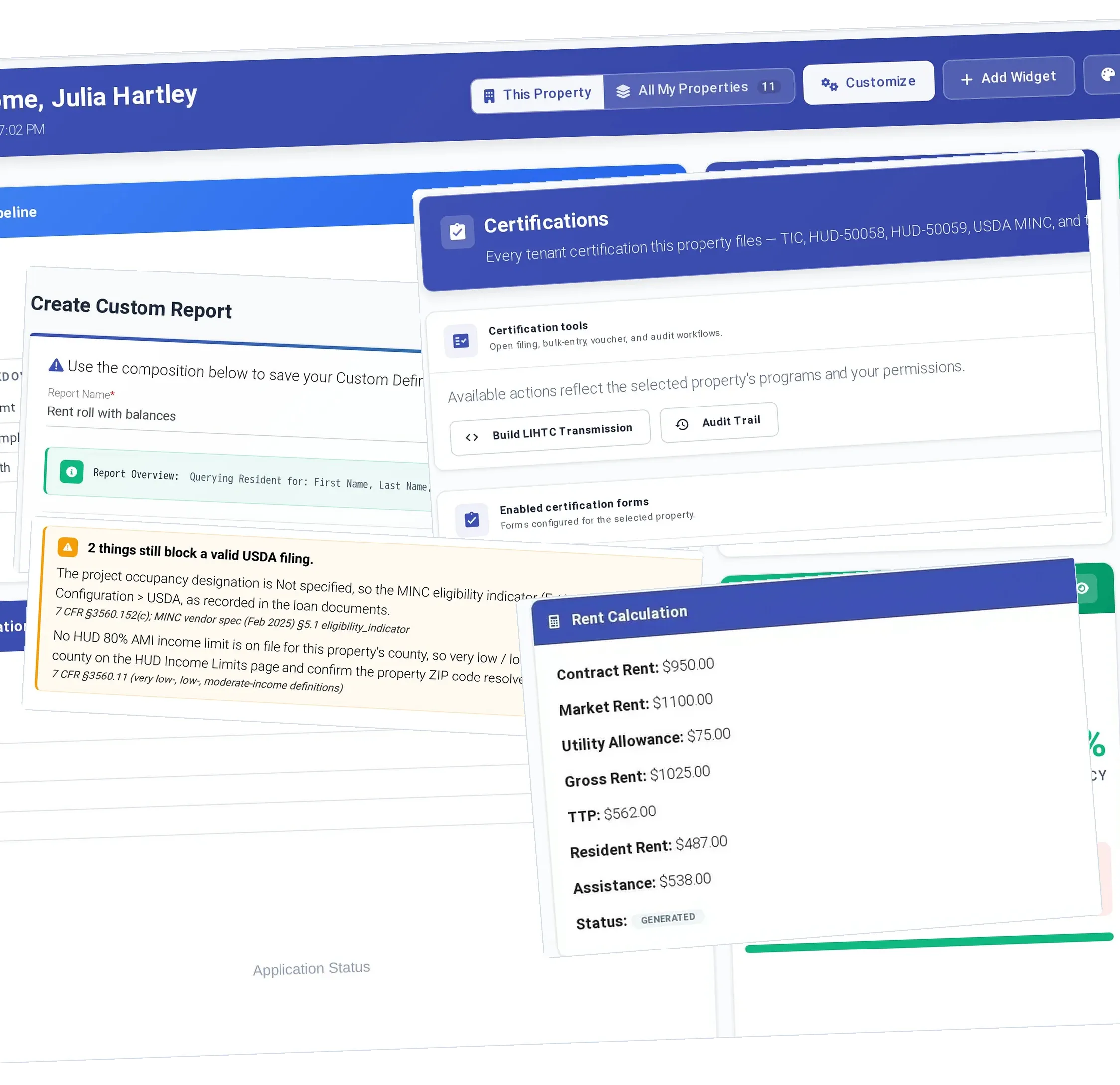
ExactEstate prides itself on an intuitive interface and navigation system, allowing users to complete tasks in as little as three clicks. This user-centric design significantly reduces the learning curve and boosts productivity since PMs spend less time clicking through countless steps. The platform's focus on simplicity doesn't come at the expense of functionality, as it still offers comprehensive tools for managing properties and units.

Fortress OS is a strong performer in the realm of user interface. Its UI is very user-friendly and can cut down on training time compared to other heavy-hitter PMS systems, like Yardi. However, some PMs who have used both suggest that ExactEstate still maintains an edge in ease of use.

Core System vs. API-Driven Approach

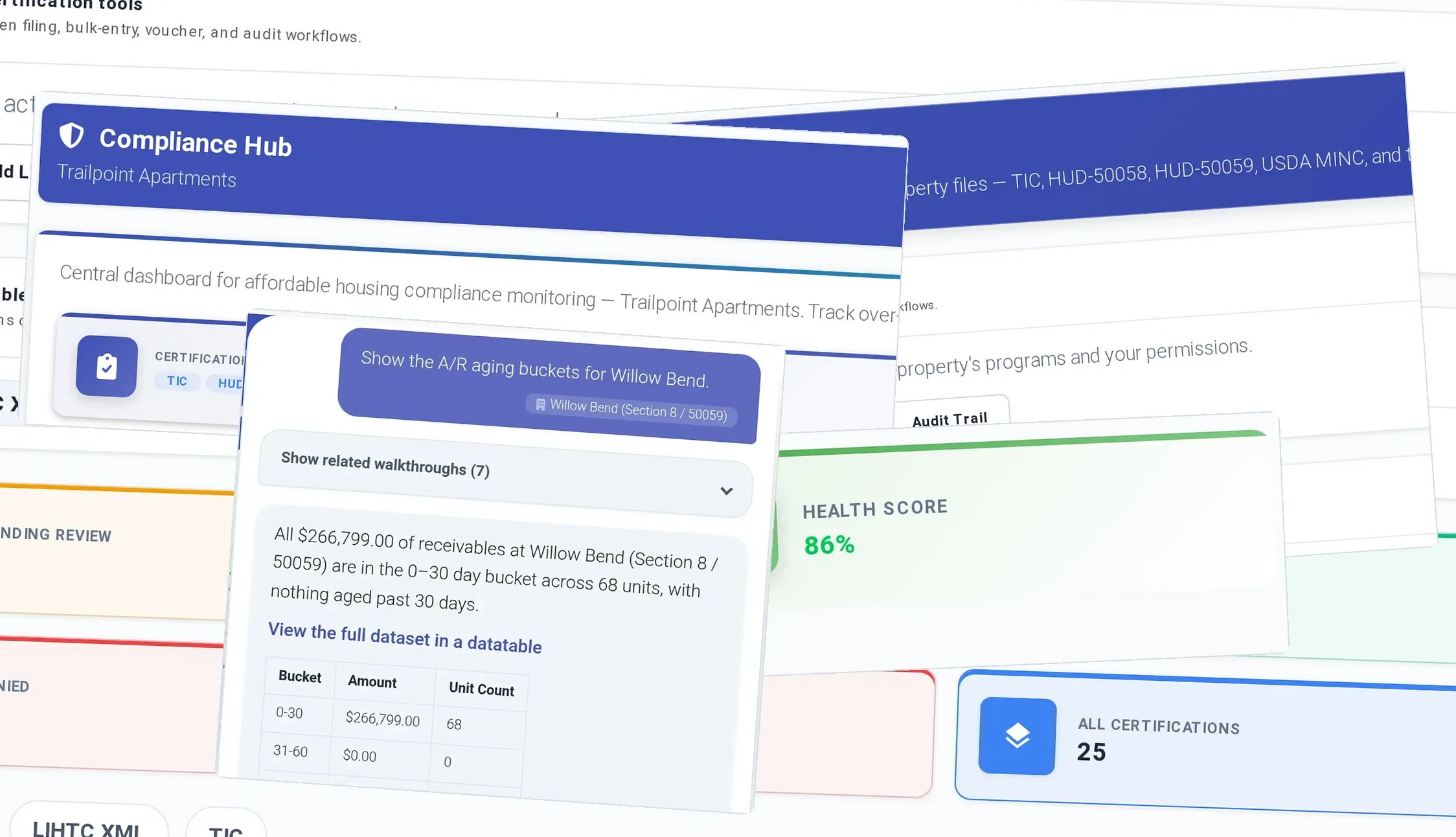
One of the most significant differences between ExactEstate and Fortress OS lies in their fundamental architecture. ExactEstate offers a robust core system that integrates all essential property management functions into a cohesive platform. This approach ensures that all features work seamlessly together out of the box, providing a more streamlined experience for users.

In contrast, Fortress OS takes an API-driven approach, offering many integrations with various third-party tools. While this can be advantageous for businesses with specific integration needs, it may make the system more complex and harder to navigate by comparison.

Customization

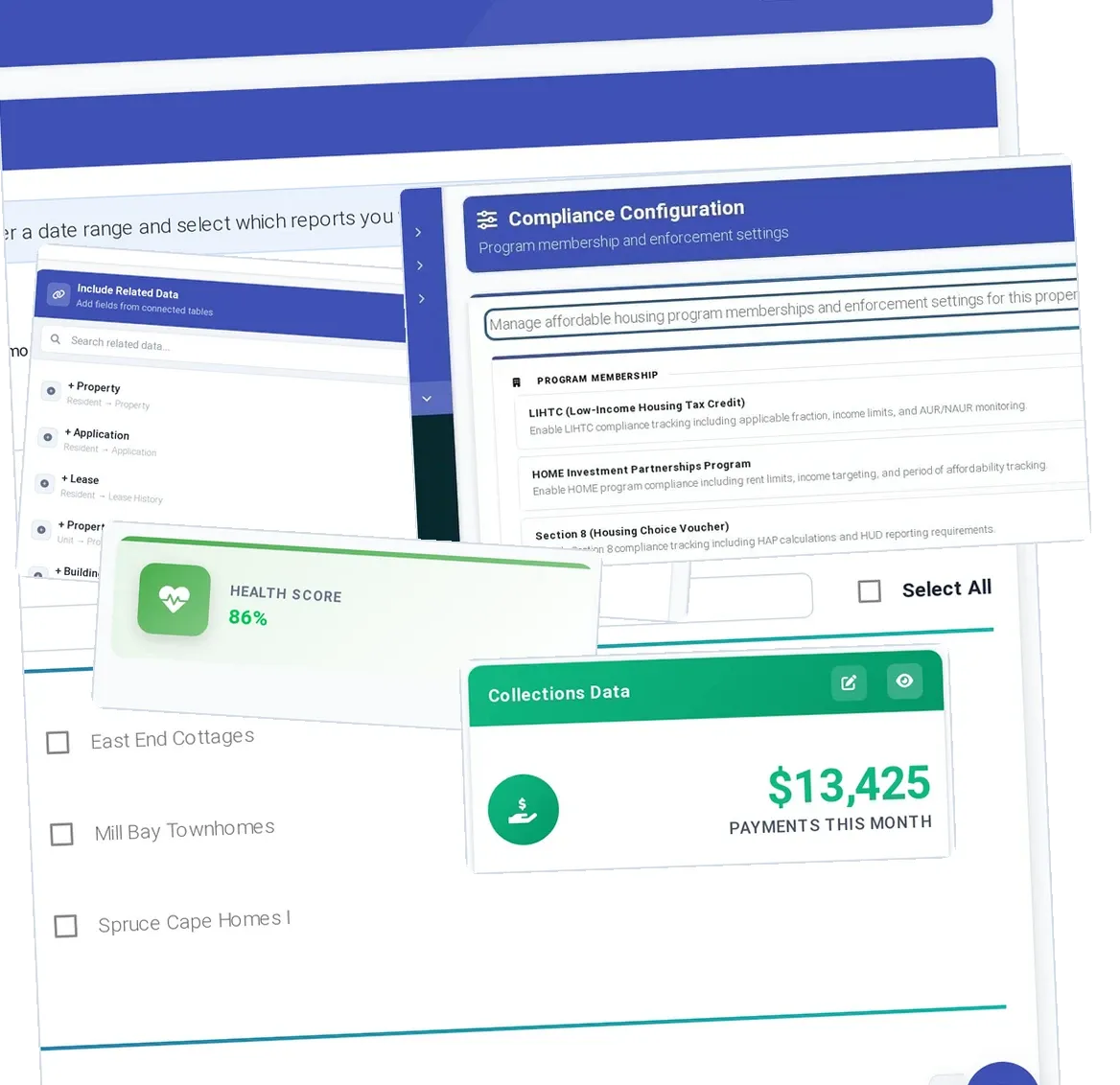
Both platforms offer customization options, but their approaches differ.  ExactEstate takes the lead with its customization features built into the core platform. Property managers can tailor the platform to their specific needs without incurring additional costs. This level of customization extends to reporting and analytics, allowing users to create bespoke reports that align perfectly with their business requirements.

Fortress OS provides commendably robust customization capabilities, particularly in its dashboards and reporting tools. This flexibility contrasts with competitors like Yardi and RealPage, which offer more standardized solutions that can be less adaptable to specific business models.

If extensive API integration and real-time data customization are priorities, Fortress OS may be more suitable. ExactEstate could be the better choice for broader customization options across various features.

Pricing Transparency and Cost 

ExactEstate stands out with its straightforward pricing model, featuring no tiers and some of the lowest processing fees in the industry. This transparency helps clients avoid unexpected costs, keep more of what they make, and simplify budgeting. The all-in-one nature of ExactEstate's core system means that all functionalities are included in the base price, providing excellent value for the PM’s money.

Fortress OS's pricing structure is similarly clear-cut. The pricing allows users to budget for their operating system costs quickly. While their essential integrations are free, premium features or services offered by third-party providers may have associated costs, which can add up quickly.

Implementation and Support

ExactEstate emphasizes a smooth onboarding process with dedicated account managers providing ongoing support. This personalized approach helps clients navigate challenges during implementation and beyond. The platform also offers assistance with data migration during onboarding, ensuring a seamless transition for new clients.

Fortress OS offers dedicated customer support and account management, indicating that ExactEstate and Fortress get more hands-on time with clients than larger, impersonal competitors. However, the complexity of managing multiple integrations in Fortress OS might also require more technical support, potentially leading to longer resolution times for issues.

Automation and Efficiency

Both platforms offer strong automation capabilities, but their implementation differs. ExactEstate’s automated features, including rent collection, maintenance requests, accounts payable, and general ledger management, are built into the core system. This integration ensures smooth operation and reduces the likelihood of conflicts or errors.

Fortress OS boasts excellent automation capabilities, leveraging its API connections to offer a wide range of automated processes. However, due to the involvement of multiple integrated systems, setting up these automations may require more initial configuration and ongoing management.

While both ExactEstate and Fortress OS offer solid property management solutions, they cater to slightly different needs and preferences. ExactEstate’s focus on user-friendliness, transparent pricing, and a comprehensive core system makes it an attractive option for those seeking an efficient, easy-to-use system with a smooth onboarding process and predictable costs.

Fortress OS, with its API-driven model and extensive customization options, may appeal to larger operations that are willing to invest time and resources in creating a highly tailored system. 

Ultimately, the choice between ExactEstate and Fortress OS will depend on your business needs, budget considerations, and preference for an all-in-one solution or a highly customizable, integration-heavy approach.

Frequently Asked Questions

Both platforms claim affordable-housing focus. What's actually different? 

Three things separate them in practice. Architecture: ExactEstate ships native accounting, native TRACS submission, and a single integrated database; Fortress deliberately omits accounting and routes it through Sage Intacct or QuickBooks, with TRACS handled through an AllTracs partnership. Program breadth: ExactEstate publicly documents support for LIHTC, Section 8 PB and TB, Section 202, Section 811, USDA Rural Development with MINC XML, HOME, Tax-Exempt Bond, RAD, Public Housing, and State HFA programs; Fortress publicly markets LIHTC, HUD, and RD/Rural without enumerating the others. Third-party validation: ExactEstate has independently verified ratings across G2, Capterra, Software Advice, and GetApp; Fortress currently has zero reviews on those platforms.

Why doesn't Fortress have native accounting, and does that matter? 

It's a deliberate architectural choice — Fortress stated in 2023 that "the early decision to forgo an internal accounting solution was deliberate." They integrate with Sage Intacct for enterprise operators and QuickBooks Online for smaller ones. For operators who already run Sage Intacct and want to keep it, that's a legitimate fit. For operators looking to consolidate vendors, reduce reconciliation overhead, or replace a separate accounting system, ExactEstate's native double-entry GL — with multi-book support, MICR check printing, Plaid bank feeds, and 93 reports across 23 categories — means the entire operation runs on a single platform with a single audit trail.

Both platforms submit to TRACS through a partnership. Is there a real difference? 

Both are partnership-based. ExactEstate submits through ShofCorp, with TRACS validation included as part of standard implementation at base price. Fortress submits through AllTracs. The practical question for a Fortress evaluation is what the AllTracs integration costs separately, which TRACS version is supported, and how iMAX communication is handled. Those are worth getting in writing before signing.

Fortress claims data migration in 4 hours. Is that accurate? 

That figure refers to the technical data-transfer step, not the full implementation. The only third-party-corroborated metric from a Fortress customer is Elmington's AffordaPortal case study, which reports a 24-hour application turnaround — an application-level metric within an active deployment, not a portfolio migration timeline. When evaluating Fortress, ask specifically what follows the 4-hour transfer: TRACS validation, accounting setup with Sage Intacct or QuickBooks, state-form provisioning, and staff training. ExactEstate measures implementation as the full process, and most affordable operators are live within days.

Why does Fortress have no third-party reviews after nearly a decade of operation? 

We don't know with certainty. Fortress has been operating since 2017–2018 with a documented customer base including Elmington, Aeon, and others. The absence of reviews on G2, Capterra, Software Advice, GetApp, and Trustpilot is unusual for a company at that stage — Fortress's G2 profile has been flagged as unmanaged for over a year. The testimonials on Fortress's own site are real and involve substantial operators, but operators who weight independent third-party validation will find significantly more public evidence about ExactEstate than about Fortress today.

How should I structure a head-to-head evaluation between the two? 

Bring specific scenarios to both demos rather than letting either vendor run their standard script. The most revealing scenarios: a layered LIHTC + Section 8 + HOME certification on one household, a USDA Rural Development recertification with MINC XML export, a state-specific TIC form your portfolio actually uses, an end-to-end voucher reconciliation, a HOTMA-aware income certification with HOTMA-compliant relationship codes, and a year-end accounting close including 1099 processing and check printing. Watch each platform execute those live. That's where architectural differences stop being theoretical.

Key takeaways

  • Fortress has repositioned around affordable housing since 2024–2025. This is no longer a comparison between an established player and an up-and-comer — it is a comparison between two affordable-housing-focused platforms with different architectural philosophies.
  • Architecture is the foundational difference. ExactEstate is integrated and serves as the source of truth. Fortress is open-API and serves as the orchestration layer across partners like Sage Intacct, QuickBooks, AllTracs, and PropUp.
  • Documented program breadth and third-party validation favor ExactEstate today. LIHTC + Section 8 PB and TB + Section 202 + Section 811 + USDA RD with MINC + HOME + Tax-Exempt Bond + RAD + Public Housing + State HFA, plus G2 Best Support Summer 2025 and 4.9-star ratings across major review platforms.
  • Pricing transparency favors ExactEstate. ExactEstate publishes $3/unit/month flat. Fortress claims transparent pricing without publishing rates or minimums.
  • Bring specific scenarios to both demos. Layered certifications, USDA RD with MINC, state-specific TIC forms, HOTMA-compliant relationship codes, end-to-end voucher reconciliation, year-end accounting close. Watch each platform execute on your actual workflows.

Want to see ExactEstate run your actual workflows?

Bring your specific programs, your state-specific TIC forms, your layered certifications, your accounting close — whatever your team handles every day.

Schedule a comparison call. No pressure. No generic demo. Just your workflows, running on our platform.

VP, GTM Strategy

Anja McKinley

As VP of GTM Strategy, Anja McKinley leverages over a decade of experience in demand generation and revenue operations to drive measurable growth. She excels at aligning marketing, sales, and product teams, using data-driven insights to accelerate pipeline velocity and deliver genuine business impact.

Stay Ahead in Property Management

Get tips, case studies, and industry insights, delivered straight to your inbox.

Subscribe to our newsletter
Thank you! Your submission has been received!
Oops! Something went wrong while submitting the form.