Tips To Enhance Leasing Specialist Scheduling
Property Management
The most effective tips to enhance leasing specialist scheduling involve mapping daily tasks, prioritizing difficult compliance reviews, and using automated property management systems to block time efficiently. By structuring your workload around strict federal income limits and asset thresholds, leasing agents can reduce distractions and ensure accurate tenant certifications. Implementing these practical daily habits directly improves communication with property managers and streamlines complex follow-ups for affordable housing applicants.
A full schedule is almost a given for leasing specialists. With the roles that they take on, they’re always busy addressing the issues of tenants or communicating with property managers. This daunting number of tasks can easily cause chaos, especially if you don’t know how to manage them properly. For related operational guidance, review property management tools and dashboards.
In this article, we’ll discuss time-tested tips to help you organize and streamline your schedule more effectively so you can start building a foundation of habits that will benefit you and your clients.
The Importance of a Good Schedule for Leasing Specialists
In general, an organized schedule is beneficial to any profession. However, it becomes paramount for those in the property management industry; a streamlined schedule will help lease specialists and property managers provide more efficient services.
A strict schedule will also help you learn proper time management, leading to more accomplished goals and less wasted time. You’ll know what things to prioritize and you’ll still have time to build professional relationships with property owners, tenants, and other concerned parties. Here are the five things you can do to organize your schedule more effectively.
1. Map out Your Tasks with a List
Your duties as a leasing specialist build up quickly, especially in busy markets like big cities, so you need to learn how to organize your schedule with a list. This might seem like a basic idea, but a lot of professionals will just go with the flow or keep lists that lack the features that make them a good time management tool.
Between negotiating leasing terms, managing disputes, and marketing properties, your list will always be packed. That’s why a good list will allow you to prioritize the most important tasks ahead. It also needs to be accessible so you can easily tick off what you’ve done and see what still needs to be accomplished.
Today, most leasing specialists have switched to mobile apps or digital lists in lieu of paper and pen. The latter can be easily lost, while your electronic device will always be with you. In addition, platforms like ExactEstate have automated property management systems that can help you make more effective lists. That’s the beauty of modernity; you can do so many things now with just a few taps.
2. Take on the Most Difficult Tasks First
Mark Twain reportedly said that we must eat a live frog each morning so we won’t experience anything worse for the rest of the day. Of course, he doesn’t mean this literally. It’s a metaphor for time management: if you take on the most difficult tasks first, the rest will be a breeze.
Research has shown that we’re most motivated during the first few hours of working, so taking on the easier tasks will take up most of your willpower and leave you procrastinating on the more difficult ones. Take advantage of your energy at the start of the day so you can tick off the tasks you’ve been dreading.
For example, if you’re choosing between reviewing the terms of a lease contract or uploading the marketing collateral of a new unit, the former should be your top priority since it takes more critical thinking and attention to detail.
3. Divide Your Work into Time Blocks
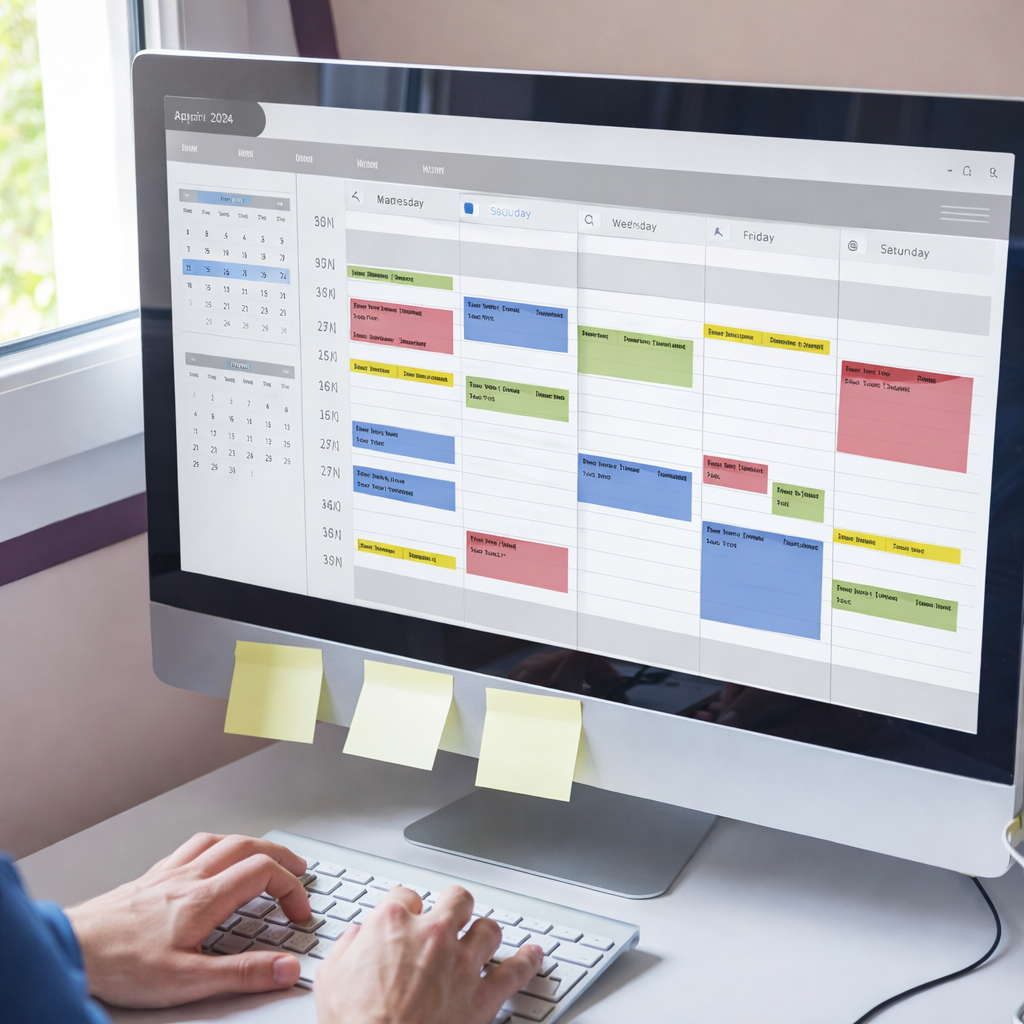
Having time blocks is a great complement to your list. This time management strategy prompts you to schedule your workday into blocks of time. Instead of having an open-ended or tightly organized schedule, you can have one that neatly assigns a specific period of time for you to work on a task.
With time blocks, you’ll know what to focus on for the next few hours and avoid distractions. You can even schedule ones that go beyond a workday. This way, you don’t end up working on a single task for prolonged periods. You’ll also be able to see what your schedule looks like for the rest of the week.
Time blocks will also help you prioritize tasks as mentioned in tip number two. This process will help you identify the most pressing tasks and assign a time block to them during your most productive hours. In addition, time blocks allow you to work on cognitively demanding tasks without any interruptions. That way, you can work with efficiency and still follow the limits you’ve set for a task.
4. Avoid Interruptions and Distractions
The banes of an organized schedule are the many interruptions and distractions that leasing specialists encounter every day. It’s already a given that social media and internet browsing should be avoided during work, but there are some legitimate tasks that you may not realize are distractions. In fact, a survey has shown that working Americans spend 50% of their day just scheduling emails, phone calls, and meetings. That’s a huge chunk allotted for something relatively unproductive.
That’s why you need to audit your schedule and see if there are minor tasks that could be eating up your time and attention. Small logistical matters, email correspondence, and phone calls for trivial matters are just some of these. You’ll want to dedicate only small-time blocks for these so the majority of your attention will be dedicated to tasks that actually matter.
5. Use an Automated Property Management System
The wonders of modern technology are at your fingertips. Today, you can make use of many apps that can help you organize your schedule more effectively. However, most of these are for general use and aren’t tailored to a specific line of work. You want one that can address your needs as a leasing specialist.
ExactEstate has what you’re looking for and more! We offer an automated property management system with an array of features created for the industry. It has an intuitive and simple interface that helps organize your workflow. In addition, the integrations allow you to access the most-used business apps today at just the tap of a button. Whether you need to schedule appointments, make reports, or track leads, you can do it all in one place. It’s the perfect companion for a productive day.
Take Advantage of ExactEstate’s Services
ExactEstate is a modern, fully-customizable, cloud-based property management software created specifically for the apartment and property management industry. With the fine-tuned features of our platform, you’ll easily learn how to organize your time as a leasing specialist. You’ll be able to create manageable lists, prioritize the important things, and avoid the many distractions of modern living. Contact us today and tell us about your needs so we can help you simplify your workday.
How do these tips to enhance leasing specialist scheduling?
These strategies improve daily organization by prioritizing high-impact tasks, minimizing distractions, and leveraging automated property management systems to handle routine tenant communications.
What is the most effective time management method for leasing agents?
Time blocking is highly effective because it dedicates specific windows to focused work, such as processing applications or returning calls, preventing context switching and ensuring all property management duties are completed efficiently.
Integrating Compliance Thresholds into Daily Time Blocks
When dividing your work into time blocks, leasing specialists must allocate specific periods for verifying applicant financials against federal affordable housing limits. Accurate scheduling ensures you have adequate time to review complex asset declarations and calculate dependent deductions without rushing. For instance, agents must verify if a family qualifies as low-income, which requires checking specific area median income percentages.
"A family whose annual income does not exceed 80 percent of the median income for the area, as determined by HUD with adjustments for smaller and larger families, except that HUD may establish income ceilings higher or lower than 80 percent of the median income for the area on the basis of HUD's findings that such variations are necessary because of unusually high or low family incomes." (24 CFR 5.603, https://www.ecfr.gov/current/title-24/section-5.603)
Furthermore, specialists must schedule additional review time when applicant assets or household sizes trigger deeper compliance audits. According to 24 CFR 5.618, deeper verification is required when the family's net assets exceed $100,000 (https://www.ecfr.gov/current/title-24/section-5.618). Agents must also apply the correct dependent deductions, such as the allowance of $480 for each dependent (24 CFR 5.611, https://www.ecfr.gov/current/title-24/section-5.611).
Daily Compliance Verification Checklist
- Confirm household income does not exceed 80 percent of the area median income (24 CFR 5.603).
- Flag applications where net family assets exceed $100,000 for full asset verification (24 CFR 5.618).
- Apply the $480 deduction for each dependent when calculating adjusted income (24 CFR 5.611).
- Schedule follow-up calls for any applications requiring additional documentation for unusually high or low family incomes.
Sources
- 24 CFR 5.603 — the regulation text — Electronic Code of Federal Regulations
- 24 CFR 5.611 — the regulation text — Electronic Code of Federal Regulations
- 24 CFR 5.618 — the regulation text — Electronic Code of Federal Regulations
What changed
- — 3 cited figure(s) match the current regulation text
- — 3 cited figure(s) match the current regulation text