6 Pool Safety Tips for Your Multifamily Apartments
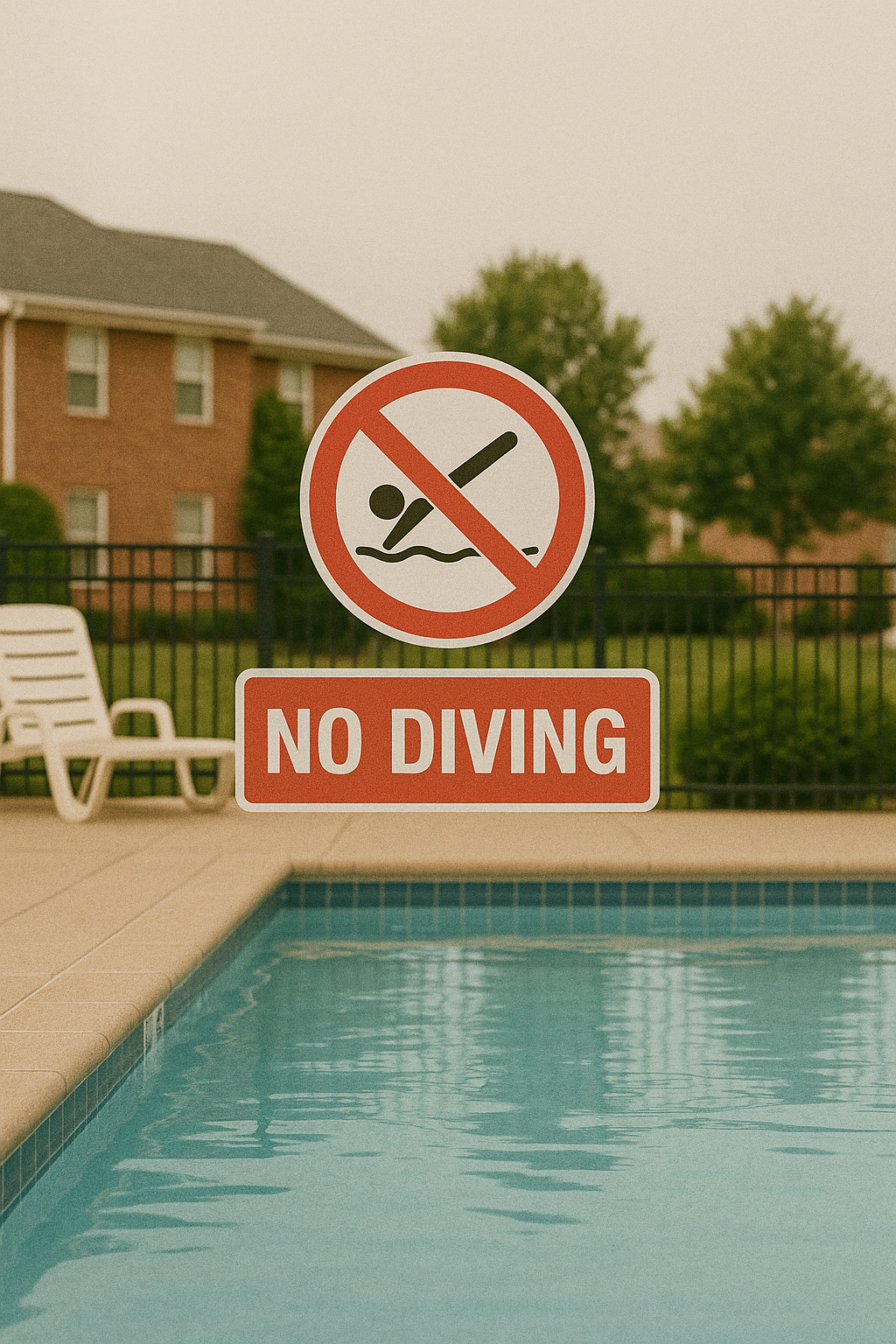
Multifamily Housing
To secure a multifamily pool, property managers must childproof the perimeter, hire certified lifeguards, keep rescue equipment accessible, conduct regular safety training, mark depth changes clearly, and install non-slip surfaces. These six protocols form the baseline for preventing accidents and limiting liability in apartment communities.
A pool can be a great selling point for your multifamily apartments. On the other hand, it can also be a great liability. As a property manager, you need to take steps to ensure that your pool is safe for residents and visitors alike. You want to avoid potential accidents and injuries, as well as costly lawsuits. For related operational guidance, review multifamily property management software.
Here are six pool safety tips for multifamily apartments:
Childproof Your Pool
Young children are particularly vulnerable to drowning, and it can happen in as little as two inches of water. Keep your pool area fenced in with a self-closing, self-latching gate that's at least four feet high. If you have an above-ground pool, remove any ladders when the pool is not in use.
Make sure to install drain covers and anti-entrapment devices as well to prevent suction injuries. Keep any toys or floats out of the pool when it's not in use, as they can attract children.
Keep your pool well-maintained and free of hazards. You can also foster a sense of responsibility to all residents by enabling them to report any maintenance issues through your resident portal. ExactEstate has a maintenance feature that lets residents easily submit work orders to the property manager. This way, everyone can help keep the pool area clean and safe.
Hire Lifeguards
You should also hire licensed lifeguards to be on duty whenever the pool is open. They will help to ensure the safety of everyone in and around the pool area and they can provide first-aid assistance if necessary.
A lifeguard should have the right credentials, including:
- A current lifeguard certification from a recognized agency, such as the Red Cross
- CPR and First Aid certification
- At least one year of previous experience working as a lifeguard
These qualifications will help to ensure that your lifeguard is capable of handling any situation that may arise.
Keep Lifesaving Equipment Handy
One of the most important pool safety tips is to keep lifesaving equipment handy. This includes a first-aid kit and other rescue tools. The best place to store this equipment is in a locked cabinet near the pool.
These are the basic lifesaving equipment to have:
Life Vests
Make sure there is a life vest or ring buoy within reach of the pool at all times. In case of an emergency, the lifeguard or another resident can quickly grab the life-saving device and throw it to whoever is in trouble.
Life Hooks
A life hook is a long pole with a curved hook on the end, which can be used to reach someone who is struggling in the water and pull them to safety. It should be placed in an easily accessible spot near the pool so that anyone can grab it in a hurry.
Rescue Tubes and Boards
Rescue tubes are an important piece of pool safety equipment. They provide a flotation device for swimmers in distress and can be used to reach them if they are too far away to swim to. Rescue boards are also handy to have on hand in case of an emergency. These look like small surfboards and can be used to help push a swimmer to safety.
First Aid Kits
A well-stocked first aid kit is a must for any property manager. Make sure your kit includes items like bandages, antiseptic wipes, and pain relievers. It should also have a CPR mask, which can be used if someone drowns. The kit must have instructions on how to properly use the equipment as well.
Conduct Regular Training
Let your staff and residents know that you take pool safety seriously by conducting regular training. Make sure everyone knows the rules and how to spot someone in trouble. You can keep them updated through a resident portal, such as the one from ExactEstate, which serves as a centralized location for announcements and other important information.
These are two training programs you can implement at your multifamily apartment:
Swimming Lessons
One of the best ways to decrease the risk of pool-related injuries is to offer swimming lessons for your residents. This is especially important for small children who are most at risk for drowning. You can enlist the help of a local swim school or even hire your own in-house swimming instructors to give lessons to residents. They can offer group or private lessons to help residents feel more comfortable in the water.
Equipping residents and staff with the proper swimming skills can go a long way in preventing accidents and injuries in the pool area. It's a win-win for everyone involved.
CPR Training
CPR training is also crucial knowledge for your staff. If someone is in the pool and suddenly becomes unresponsive, your staff should know how to effectively administer CPR. This could mean the difference between life and death for a resident or guest.
There are public and private organizations that offer CPR training, and some even offer online courses. The American Red Cross is one example of an organization that offers both in-person and online CPR training courses.
Make sure to post the necessary CPR information on your property management portal. ExactEstate allows you to post detailed training modules to standardize the care and procedures for your multifamily apartment community. It also allows you to track, measure, and improve employee competency through online tests.
Mark Changes in Depth Clearly
Most people can't tell the difference between 3 feet and 5 feet of water just by looking at it. Make sure your pool has a clear and visible depth marker so everyone knows how deep the water is.
This is particularly important if you have young children using the pool. You should notify them and their parents of the depth changes so they can be more cautious.
Install Non-Slip, Gripped Materials
Make sure to install non-slip, gripped materials on all surfaces around your pool area. This will help prevent serious injuries if someone falls. It is also a good idea to put up signs that warn people of the slippery surface. The last thing you want is for someone to fall and hit their head on the concrete.
Takeaway
These pool safety tips for multifamily apartments will help keep your residents happy and safe all summer long. Maximize your property management software by publishing pool safety rules and regulations for all residents to see.
ExactEstate is a one-stop-shop for all your real estate needs, including software for tracking rental agreements, managing finances, and more. Schedule a free demo today to see how we can help you take your business to the next level.
What are the most common pool safety violations in apartment communities?
The most common pool safety violations in apartment communities include leaving pool gates propped open, allowing children to swim without adult supervision, and running on the pool deck. Enforcing clear rules and posting visible signage helps property managers reduce these risks and maintain a secure environment for all residents.
How often should apartment pool equipment be inspected?
Apartment pool equipment, including life rings, rescue tubes, and first aid kits, should be inspected at least once a month to ensure everything is in working order. Property managers should also conduct a comprehensive safety audit of the entire pool area, including gates, fences, and non-slip surfaces, at the start of every swim season.
How does affordable housing compliance intersect with multifamily management?
Managing a multifamily property extends beyond pool safety to strict federal compliance for affordable housing. For example, when verifying resident eligibility, managers must know that under 24 CFR 5.603, a qualifying family is defined as one where: "A family whose annual income does not exceed 80 percent of the median income for the area, as determined by HUD with adjustments for smaller and larger families, except that HUD may establish income ceilings higher or lower than 80 percent of the median income for the area on the basis of HUD's findings that such variations are necessary because of unusually high or low family incomes." Furthermore, managers must track dependent deductions, which 24 CFR 5.611 sets at "$480 for each dependent, which amount will be adjusted by HUD annually in accordance with the Consumer Price Index for Urban Wage Earners and Clerical Workers, rounded to the next lowest multiple of $25." Finally, asset limits apply; under 24 CFR 5.618, a family's net assets cannot exceed $100,000, an amount also adjusted annually by the Consumer Price Index.
Sources
- 24 CFR 5.603 — the regulation text — Electronic Code of Federal Regulations
- 24 CFR 5.611 — the regulation text — Electronic Code of Federal Regulations
- 24 CFR 5.618 — the regulation text — Electronic Code of Federal Regulations
What changed
- — 4 cited figure(s) match the current regulation text
- — 4 cited figure(s) match the current regulation text