How to Select Affordable Housing Software

Affordable Housing
To select the best affordable housing software, operators must prioritize platforms with built-in HUD and LIHTC compliance automation, blended occupancy support, and seamless integration with subsidy payment systems. A purpose-built property management system reduces manual data entry, ensures accurate tenant income certification, and scales effortlessly as portfolios expand, ultimately protecting properties from costly regulatory penalties while streamlining daily administrative tasks.
Introduction:
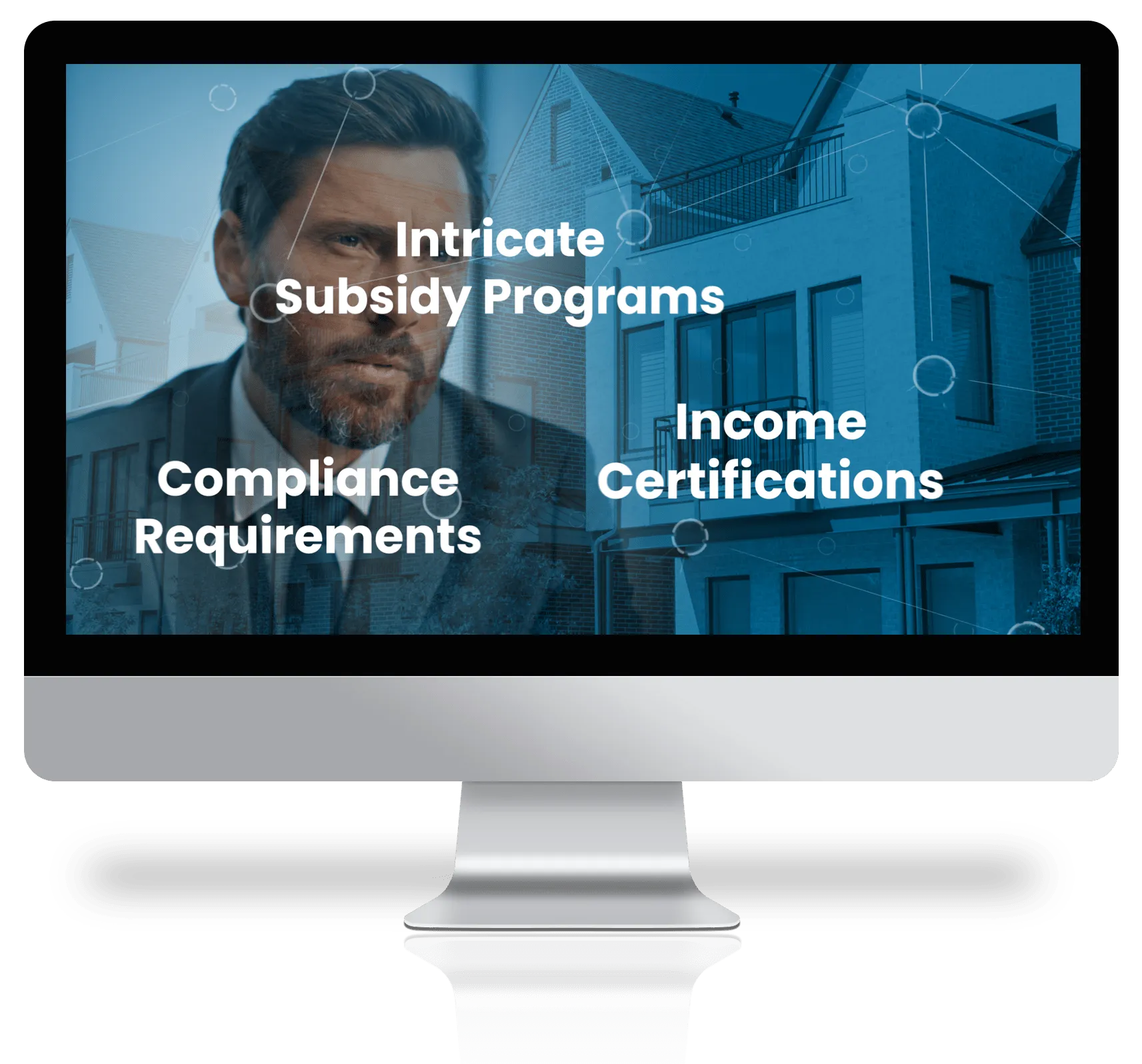
Affordable housing is a critical aspect of addressing societal needs, and as property managers navigate this complex landscape, the right software can make all the difference. In this blog, we'll delve into affordable housing software, highlighting key features and tips for choosing the right Property Management System (PMS). We aim to ensure compliance, streamline operations, and facilitate the management of subsidy payments, HUD regulations, LIHTC, and more. For related operational guidance, review affordable housing compliance software.
Understanding the Landscape:
Affordable housing software is essential for property managers handling subsidized housing programs like HUD and LIHTC. To effectively manage rental properties under such programs, a robust Property Management System is essential. Let's delve into key aspects to consider when selecting the right rental management software for these specialized communities.
1. Comprehensive Tenant Income Certification:
Look for a property management software system that offers a seamless process for tenant income certification. This feature ensures an accurate determination of eligibility for subsidized programs and simplifies the often complex income verification process.
2. Integration with Subsidy Payment Systems:
The chosen PMS should seamlessly integrate with subsidy payment systems, ensuring timely and accurate processing of payments. This is crucial for maintaining financial stability and compliance with subsidy programs.
3. HUD Compliance:
HUD regulations are stringent, and non-compliance can have serious consequences. Ensure that the property management system is HUD-compliant, with features that facilitate easy adherence to federal guidelines. This includes tracking and reporting on income limits, Fair Market Rents (FMR), and other HUD requirements.
4. LIHTC Management:
For properties utilizing Low-Income Tax Credits, a PMS with LIHTC management capabilities is essential. This includes features to track and manage tax credit allocations, compliance reporting, and other LIHTC-related functionalities.
5. Blended Occupancy Support:
Many affordable housing properties have blended occupancy, combining market-rate and subsidized units. The selected PMS should offer support for blended occupancy, ensuring accurate tracking of different unit types and associated regulations.
Guidelines to Choose the Right PMS:
Now that we've identified key features, let's explore some tips to guide you through the selection process:
1. User-Friendly Interface:
Opt for software with an intuitive interface. This simplifies the system for property managers, staff, and tenants, making it more efficient and easier to learn.
2. Scalability:
Choose a PMS that can scale with your business. As your portfolio grows, the software should seamlessly accommodate increased units and expanded functionalities.
3. Cloud-Based Accessibility:
Cloud-based systems offer flexibility and accessibility, allowing property managers to access information from anywhere. This is particularly beneficial for on-the-go property management and remote work scenarios.
4. Automation for Reporting:
Reporting is a critical aspect of managing these specialized assets. Find software that automates creating compliance reports, financial statements, and other important documents, saving time and reducing mistakes.
5. Customer Support and Training:
Select a vendor that provides robust customer support and training options. This ensures that your team can make the most of the software and quickly address any issues that may arise.
In the pursuit of efficient and compliant affordable housing management, consider scheduling a demo with ExactEstate. Property managers in the affordable housing industry helped develop our software. Our software meets the unique needs of property managers handling subsidy programs, HUD, LIHTC, and blended occupancy. Experience the power of a comprehensive Property Management System that streamlines operations and ensures compliance.
Conclusion:
Affordable housing software transforms how property managers handle subsidy programs, HUD regulations, and LIHTC complexities. By selecting the right Property Management System with the features mentioned above, property managers can enhance operational efficiency, ensure compliance, and contribute to the provision of affordable housing for communities in need.
What specific compliance features should affordable housing software include?
When evaluating property management systems for these communities, operators must prioritize built-in compliance features that automate regulatory reporting and minimize manual data entry. The software should natively support HUD compliance workflows, including the automatic generation of required forms, tracking of annual recertification deadlines, and management of utility allowances. Additionally, it must facilitate LIHTC management by continuously monitoring tenant income limits, tracking student status, and ensuring units remain compliant with complex federal and state tax credit requirements. By centralizing these intricate compliance tasks within a single platform, the system significantly reduces the risk of human error. This proactive approach helps property managers maintain audit readiness at all times and avoid costly penalties associated with missed deadlines, incomplete files, or inaccurate reporting to housing authorities.
How does cloud-based accessibility improve operations for affordable housing providers?
Cloud-based accessibility fundamentally transforms how property management teams operate by providing secure, remote access to critical operational data from any internet-connected device. For affordable housing providers, this means staff can process new applications, update tenant records, review financial ledgers, and generate compliance reports whether they are stationed at the property office, working remotely, or traveling between multiple sites. This operational flexibility ensures that vital compliance documents and financial records are always current and instantly accessible to authorized personnel in real time. Furthermore, cloud-based systems automatically manage routine software updates, security patches, and daily data backups. This eliminates the heavy burden on internal IT resources and guarantees that the platform consistently runs on the latest secure infrastructure, allowing property managers to focus entirely on resident services and portfolio growth rather than technical maintenance.
Key Compliance Thresholds Checklist
When evaluating property management systems, verify that the software automatically tracks and updates the following federal limits to prevent manual calculation errors.
- Income limits: Flag households exceeding 80 percent of the area median income, as determined by HUD with adjustments for smaller and larger families (24 CFR 5.603).
- Dependent deductions: Apply a $480 deduction for each dependent, which is adjusted by HUD annually (24 CFR 5.611).
- Asset verification: Streamline asset checks using the $50,000 net asset certification threshold to bypass additional verification steps (24 CFR 5.618).
Section 24 CFR 5.618 states: (1) A PHA or owner may determine the net assets of a family based on a certification by the family that the net family assets (as defined in § 5.603) do not exceed $50,000, which amount will be adjusted annually in accordance with the Consumer Price Index for Urban Wage Earners and Clerical Workers, without taking additional steps to verify the accuracy of the declaration.
Sources
- 24 CFR 5.603 — the regulation text — Electronic Code of Federal Regulations
- 24 CFR 5.611 — the regulation text — Electronic Code of Federal Regulations
- 24 CFR 5.618 — the regulation text — Electronic Code of Federal Regulations
What changed
- — 4 cited figure(s) match the current regulation text